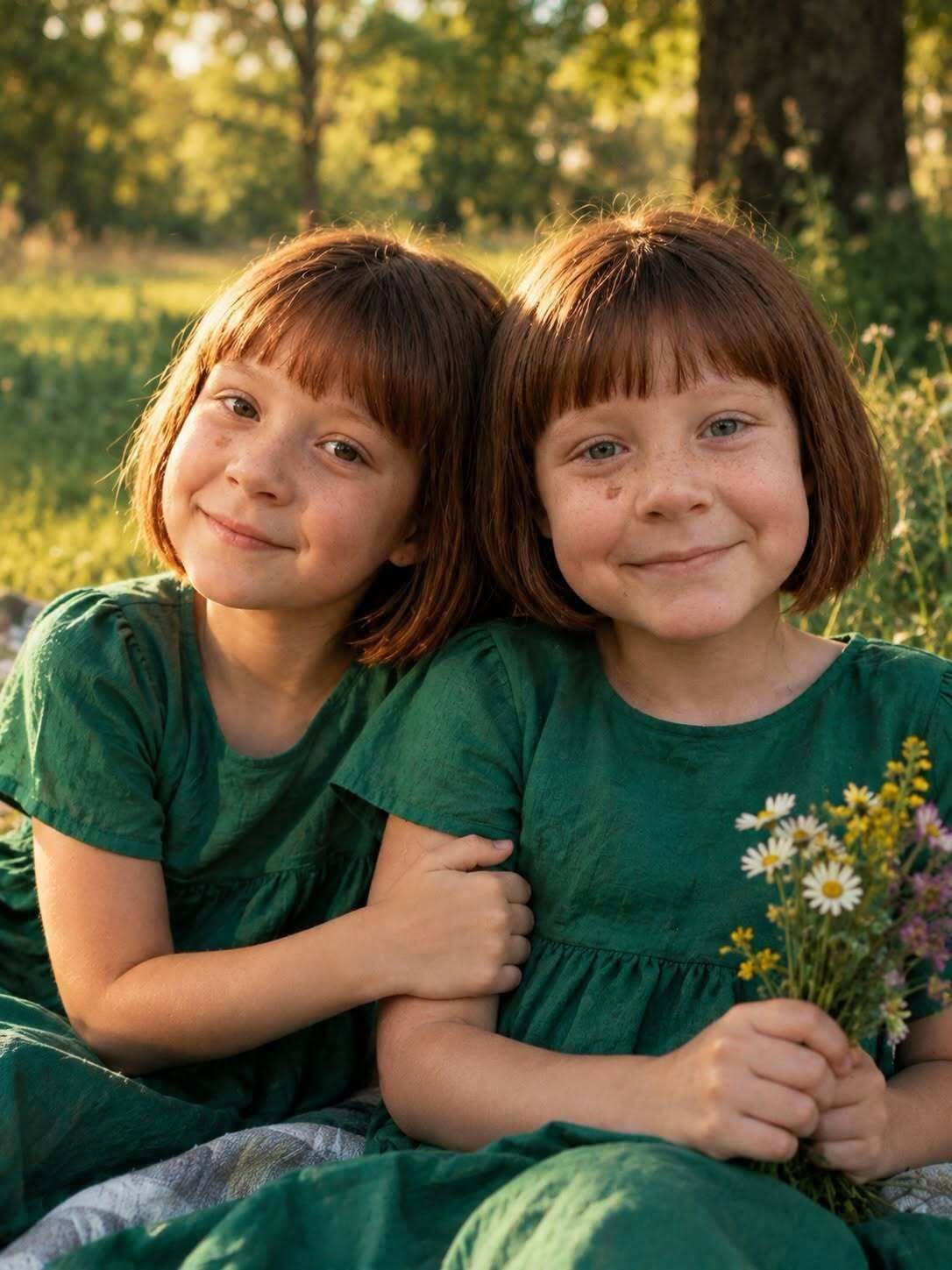
I slid the metal latch on Junie’s blue lunchbox, the one that cost twelve dollars at the pharmacy uptown. It was seven in the morning, and the kitchen smelled of toast. Junie sat on the stool, her small legs swinging back and forth, her left pigtail already starting to lose its pink ribbon.
“Mommy, you have to pack one more lunchbox,” she said.
I did not stop spreading the grape jelly. “You only have one stomach, Junie bug.”
“Not for me,” she said, her voice dropping to a busy whisper. “For Lizzy. She didn’t have her lunch yesterday.”
I paused, the butter knife hovering over the bread. I adjusted my silver wristwatch, pulling the leather band one notch tighter. It was her first week of first grade at Oak Creek Elementary, and she had spent the last three days talking about a girl who sat across from her at the low plastic tables.
“Lizzy has her own lunch, Junie,” I said, closing the bread bag with a yellow twist tie. “Her mother probably packs her very nice things.”
“She doesn’t,” Junie said, swinging her legs harder so her sneakers clipped the rungs of the stool. “She wants a sandwich like mine. With the crusts cut off in the little triangles.”
I tucked the blue lunchbox into her backpack. On the counter sat the pink plastic disposable camera I had bought her for fourteen dollars, hoping she would take pictures of her classroom to show me. I slipped it into the side pocket of her bag next to her water bottle.
“Take some pictures today,” I said, kissing the top of her head. “Show me what the playground looks like.”
“I will take pictures of Lizzy,” she said, snatching the backpack off the counter. “We are going to share the swings.”
The afternoon heat still held the heavy, damp weight of Ohio in September. I stood near the brick pillars of the school gate, watching the heavy double doors open. A stream of small children poured out into the courtyard, their sneakers squeaking on the concrete path.
I adjusted my wristwatch again, my eyes scanning the crowd of small, bright backpacks. Junie came running toward me, her shoelaces dragging in the dirt. Her pink camera was clutched tightly in her right hand, her thumb pressed flat against the green cardboard wrapper.
“Mom, Mom, look,” she gasped, skipping a step as she reached my side. “I took five pictures. I took one of the big oak tree and three of Lizzy.”
“Slow down, sweetie,” I said, taking her heavy backpack from her shoulders. “Let’s get to the car before we lose a shoe.”
“Lizzy has the same shoes,” Junie said, her words rushing out in a single breath. “The blue ones with the silver stars on the sides. And she has the same face.”
I stopped walking. The other parents were moving past us, chatting about soccer practice and spelling tests. I looked down at Junie, whose left hand was already twirling her pigtail, a sure sign she was running on empty.
“A lot of girls have those shoes, Junie,” I said, keeping my voice quiet and level. “They were on the front display at the shoe store last month.”
“Not the face,” Junie said, her eyes wide as she looked up at me. “She has my face. She looks like me, Mom, but her hair parts on the other side.”
The living room of our rental cottage was quiet, save for the low hum of the refrigerator from the kitchen. I sat on the edge of the plaid sofa while Junie lay on her stomach on the rug, the pink camera resting between her elbows.
“We have to get the film out,” she said, tapping the plastic wheel on the back of the camera. “We have to see the pictures.”
“We can take it to the pharmacy tomorrow morning,” I said. “It takes a little while to get them developed.”
“But she is my sister,” Junie said, turning over onto her back to stare at the ceiling. “She told me she has a box at home with a silver baby spoon in it. Just like mine.”
I felt a cold spot form in the center of my chest, small and sharp. I reached down and took the camera from the rug, turning it over in my hands. It was light, almost weightless, the cheap plastic lens reflecting the pale light from the window.
“People have similar things, Junie,” I said, my voice pausing between the words. “It is just a coincidence.”
“She is six,” Junie said, her voice dropping as she reached up to twirl her hair again. “And she was born on the same day. September twelfth.”
I set the camera on the coffee table. The date sat in the room like a heavy piece of iron. Six years ago, in the maternity ward at Oak Creek Memorial, the doctor had placed one baby in my arms and told me the other had not survived the night.
“Who told you that?” I asked.
“Lizzy did,” Junie said. “She said her mom has her baby paper in a blue folder.”
The house was dark except for the small light over the kitchen sink. Junie was asleep in her room, her breathing slow and regular through the thin drywall. I stood at the sink, my hands in the warm soapy water, washing the blue metal lunchbox.
On the small wooden shelf above the stove sat a single framed photograph. It was a black-and-white picture of two tiny infants, taken in the first hour of their lives, before the nurse had carried the second one away. Next to the frame was a small glass jar containing Junie’s yellow plastic hospital bracelet.
Beside the jar, the shelf was empty. There was only a pale circle in the dust where the second bracelet should have been, the one they told me they had to keep for the hospital records.
I dried my hands on the kitchen towel and walked over to the back door. My keys were hanging from the small brass hook near the frame. I looked at the ring, my thumb tracing the empty metal loop where my husband’s house key had lived before he packed his bags and left for Indiana three years ago.
I picked up the pink camera from the kitchen table. The wind was starting to blow outside, rattling the loose screen on the porch window.
I had to know whose name was on that school enrollment card.
I pulled the front door shut behind me and checked my silver wristwatch. It was exactly twenty minutes before ten.
The local pharmacy on Oak Street smelled of peppermint drops and paper backdrops. I walked straight to the photo counter at the back, where a young man with a silver hoop in his left ear was sorting yellow envelopes.
“Just a develop and print, please,” I said, sliding the pink plastic camera across the glass.
He picked it up, turning the small plastic wheel on the back with his thumb. “We still get a few of these. Mostly from the middle school kids.”
“My daughter took it,” I said. “She had her first day yesterday.”
“That will be eight dollars even,” he said, tapping the cash register screen.
I pulled a five and three singles from my wallet. My fingers felt cold against the paper money.
“Two hours,” he said, dropping the pink camera into a plastic bin behind him. “Come back around noon.”
“Will they be clear?” I asked.
He shrugged, his shoulder rising under his blue polo shirt. “Depends on if she kept her fingers off the lens.”
I nodded, adjusting the strap of my purse, and walked out into the autumn air.
The hour went by in a slow crawl. I walked down to the bakery, bought a cup of black coffee, and sat on the green bench near the hardware store.
A black sedan drove past, its windows tinted so dark I could only see the reflection of the maple trees. I watched it turn corner onto Elm Street, toward the elementary school.
At ten past eleven, I walked back to my station wagon and sat in the driver’s seat with the door open. My brother Gary had texted me a picture of a survey map he was working on, but I did not reply.
The clock on the bank across the street showed twelve on the dot when I walked back through the glass doors of the pharmacy.
The young man was gone, replaced by an older woman named Brenda who wore her reading glasses on a beaded chain. She did not look up until I tapped my fingers on the counter.
“Name?” she asked.
“Phoebe Miller,” I said.
She slid her finger down a row of paper packets in a metal drawer, pulled out a thick envelope, and laid it between us. “That will be the receipt from this morning.”
I handed her the white slip of paper. My hand was steady, but my throat felt dry.
“Do you mind if I open them here?” I asked.
“Go right ahead,” Brenda said, already looking back down at her ledger. “Most people can’t wait until they get to the car.”
I tore the paper tab off the top of the envelope. The glossy prints slid out onto the counter face down.
I turned the first three over. They were blurry shots of the kitchen floor, a close-up of Junie’s stuffed rabbit, and a lopsided picture of our front porch.
Then I reached the fourth photo.
Two girls stood side by side in the hallway of Oak Creek Elementary School, right in front of the green metal cubbies. They were wearing identical blue shirts, and both of them were grinning.
“Everything look all right?” Brenda asked, her voice sounding distant.
“Yes,” I said, my voice barely a whisper. “They look fine.”
I gathered the prints, slid them back into the paper envelope, and walked out to the parking lot.
I sat in the driver’s seat of my station wagon, the keys dangling from the ignition. The air inside the car was warm from the midday sun, but I did not roll down the window.
I reached into my purse and pulled out the small leather pouch that held my dental loupes. The magnifying lenses were three times stronger than normal sight, designed for checking the margins of a silver filling.
I held the photo under the steering wheel, where the light was strongest.
Through the magnifying glass, the grain of the paper turned into tiny dots of ink. I focused on the girl on the right, the one Junie said was named Lizzy.
Her hair was parted on the left side, opposite of Junie’s right part, but the shape of her chin was identical. I moved the lens upward, past her small nose, to the skin just below her left eye.
A tiny, brown birthmark shaped like a teardrop sat exactly two millimeters below her lower lid.
I breathed in slowly, holding the air in my lungs until they ached. Junie had that exact same brown teardrop under her left eye, in the very same spot where my grandmother had kept hers.
It was a rare mark, a familial sign that the pediatrician had noted in our records when Junie was three days old.
I dropped the magnifying glass into my lap. The photo seemed to pulse in the bright light of the windshield.
“It is just a coincidence,” I said to the empty car.
The words sounded thin, like dry leaves scraping against cement.
I started the engine, backed out of the space, and drove toward the elementary school to wait for the three o’clock dismissal.
By five o’clock, Junie was sitting at the kitchen table, her small legs swinging under the chair. She was spreading peanut butter on a square cracker with a plastic knife.
“She looks like me, Mom, but her hair parts on the other side,” Junie said, her mouth full of cracker crumbs.
“I saw that in the picture, sweetie,” I said, sitting down across from her. “You two look like you could be sisters.”
“We are sisters,” Junie said simply. “She told me she has a pink room too, but her bed has a big crown on top of it.”
“Does she live close by?” I asked, keeping my voice light and even.
“In the big brick houses,” Junie said, using her sticky finger to point toward the north side of town. “The ones with the tall black fences.”
I adjusted my silver wristwatch, feeling the cool metal slide against my skin. “And her mother? Have you met her?”
“She comes to the gate,” Junie said, swinging her legs faster. “She wears a long navy coat. Every single day.”
“What kind of car does she drive?” I asked.
“A big black one,” Junie said. “It has shiny wheels and the windows are dark so you can’t see inside.”
“Did Lizzy say her mother’s name?” I asked.
“Suzanne,” Junie said, reaching for another cracker. “Lizzy calls her Mom, but sometimes she calls her Suzanne when she is mad.”
I stood up from the table and walked over to the counter. The glossy photo was lying near the toaster, the two identical faces staring back at me with innocent, wide eyes.
“Can we play tomorrow?” Junie asked.
“We will see, Junie,” I said. “Let me talk to some people first.”
I carried the photo down the hallway to my bedroom. The house was quiet, save for the hum of the refrigerator in the kitchen.
I opened my closet door and reached for the small wooden jewelry box that had belonged to my mother. The key was hidden inside a silver thimble in my top drawer.
I unlocked the brass latch, lifted the velvet tray, and slid the school photo under a stack of old dental certificates.
The wood clicked shut, and the lock turned with a heavy, final sound.
By eleven o’clock the next morning, the rain had cleared enough to leave the streets of Oak Creek smelling of wet asphalt and cut grass. I walked into the local grocery store on Broad Street, carrying a yellow plastic shopping basket I did not really need. I only wanted to clear my head, but the air inside was thick with the scent of bakery yeast and sweet glaze.
Near the cart of fresh rye bread, a woman in a heavy knitted cardigan was sorting through the loaves. It was Marla, the retired maternity nurse who had held my hand six years ago in the delivery room of Oak Creek Memorial. Her hair was thinner now, pinned back with a plastic comb, but I would know that square chin anywhere.
“Marla,” I said, my voice sounding thin against the hum of the dairy coolers.
She did not turn her head, but her fingers froze on a package of sliced sourdough.
“Marla, it is Phoebe,” I said, taking two steps closer.
The loaf of bread slipped from her fingers, hitting the gray linoleum floor with a soft thud. She did not reach down to pick it up, nor did she look at my face. Instead, she kept her eyes fixed on the lower shelf, her chin tucked against her collar.
“I have to get home,” she whispered. Her voice was a low, husky whisper, just as I remembered it from the quiet nursery.
“I saw a little girl at the school yesterday,” I said, my hand instinctively going to my silver wristwatch, turning the metal band around my wrist. “She looks exactly like Junie. You were there the night they were born, Marla.”
Marla turned away from me, her shoulder brushing against a display of apple cider jugs. She walked quickly toward the back of the store, her sneakers squeaking on the white tile as she headed for the emergency exit near the milk crates.
“Marla, please wait,” I called out, but she did not slow down.
She pushed through the heavy metal doors into the delivery alley without looking back once. The door swung shut behind her, leaving me standing alone by the cart of stale rolls, my heart knocking against my ribs.
The county records office sat on the second floor of the municipal building, smelling of old carpet and wet umbrellas. The clerk behind the counter was Arlene, a woman who had gone to high school with my older cousin and had known our family for thirty years.
I laid two twenty-dollar bills and a ten-dollar bill on the wood counter, the paper crisp and cold from the bank machine. It was fifty dollars from my winter heating fund, but I did not care.
“I need the first-grade enrollment names for Oak Creek Elementary,” I said, my fingers pressing into the cool wood.
Arlene looked at the cash, then up at my face, her brow furrowing. “There is a fee for any search of district rosters, Phoebe, and you have to sign the formal request sheet.”
“I will sign whatever you need,” I said.
She typed my name into her system, the keys clicking loudly in the empty room. “I cannot print the parental records or the emergency contact cards for you. Those are confidential without a court order.”
“I only need to know one thing,” I said, leaning closer to the glass partition. “The girl named Elizabeth. I need to know who signed those enrollment forms, Gary.”
I stopped, my face warming as I realized I had used my brother’s name instead of hers because I was thinking of his advice.
Arlene stared at her screen for a long moment, her hand hovering over her keyboard. “I should not even be looking at this, Phoebe. If the supervisor walks in, I could lose my position.”
“Please,” I said. “Just look at the mother’s line.”
She sighed, a soft sound that was lost in the hum of the fluorescent lights. “Suzanne Vance is listed as the mother. She signed the registration card on August twelfth. She listed herself as the biological mother.”
She pushed my fifty-dollar receipt across the counter, her eyes fixed on her desk. “You did not get that from this office, Phoebe. In a town this small, people talk.”
“I know,” I said, tucking the small slip of paper into my pocket. “Thank you, Arlene.”
I walked out into the parking lot, feeling the weight of what I had just done. My savings were fifty dollars lighter, and by tomorrow, half the town would know I was digging into Suzanne’s private business.
Gary was waiting in his Ford truck at the edge of the school lot, the engine idling with a steady rattle. I climbed into the passenger seat, the smell of damp earth and pine sawdust on his jacket instantly filling the cab.
He was holding his surveyor clipboard, tapping his black ballpoint pen against the metal clip in a steady, rhythmic beat. I took the pink camera photograph out of my purse and laid it on the dashboard between us.
Gary stopped tapping his pen. He picked up the glossy picture, holding it close to his eyes under the gray afternoon light.
“The birthmark is in the exact same spot under the left eye,” he said, his Midwestern accent flat and heavy. “It is the same girl, Phoebe.”
“The records clerk confirmed Suzanne is listed as the mother,” I said. “She signed the forms herself.”
“We need more than a school photo to prove a nursery swap happened six years ago,” Gary said, setting the clipboard on his knees. “We need the hospital records from Oak Creek Memorial.”
“They won’t just hand those over to me,” I said.
Gary turned his head, looking out the side window toward the old maple tree near the school fence. “I saw Marla sitting in her Buick under that tree this morning during recess.”
I turned to look at him, my hand tightening on my purse strap. “Why is Nurse Marla watching the girls from the school tree?”
“She was just sitting there, watching them play on the swings,” Gary said. “When I drove past in the truck, she pulled her sun visor down so I couldn’t see her face.”
“She avoided me at the grocery store today,” I said. “She dropped her bread and ran out the back door.”
Gary tapped his pen against the clipboard again, his jaw tight. “She knows something, Phoebe. People don’t run away from a grocery store unless they are carrying a heavy lie.”
“I need to talk to Suzanne,” I said, watching the first school bus pull into the driveway.
“Be careful,” Gary said, reaching over to pat my arm. “She has money, and she has deep roots in this county. She won’t let you just walk up and take her daughter.”
The three o’clock buzzer had not gone off yet, but the parents were already lining up along the chain-link fence. I stood near the gate, my fingers hooked into the cold metal wire, watching the double glass doors of the school.
Junie came running out first, her blue lunchbox swinging in her hand. Right behind her was Lizzy, her left pigtail twirling as she laughed at something Junie said. They looked like two halves of the same child, their strides matching perfectly as they crossed the concrete courtyard.
Suzanne was waiting by the curb, her navy wool coat buttoned to her chin. She did not look at the other mothers, her gold middle finger band catching the autumn sun as she twisted it around and around.
“Lizzy,” Junie called out, waving her pink camera in the air.
Lizzy started to wave back, but Suzanne reached down and grabbed the girl by her wrist, pulling her toward the black sedan. Her grip was tight, her face pale and hard.
“Suzanne,” I called out, stepping away from the fence.
Suzanne did not stop, but her shoulders went rigid under her coat. She opened the passenger door, helped Lizzy inside, and shut it with a firm click that echoed across the driveway.
As she walked around to the driver’s side, I stepped onto the sidewalk, blocking the path to her door.
“We need to talk about the girls,” I said, pausing between my words to keep my voice steady.
Suzanne kept her eyes fixed on her car door, her face pale and set like stone. She twisted the gold ring on her finger, her lips pressed into a thin, white line.
“There is nothing to discuss,” she said, her voice clipped and formal.
She turned her head away from me, ignoring my hand as I reached out toward her sleeve. She slipped into the driver’s seat and locked the doors before I could say another word.
The black car pulled away from the curb, leaving a cloud of gray exhaust in the cold autumn air. I stood on the pavement, watching the red taillights disappear around the corner of the block.
Gary walked up behind me, his heavy boots crunching on the gravel of the school path. He did not say anything, but he put his arm around my shoulders as the school bus drove away.
The outer office of the school smelled of lemon floor wax and wet wool umbrellas. I stood by the low counter for ten minutes before Principal Vance’s assistant looked up from her computer and nodded toward the inner door.
Principal Vance sat behind a metal desk cluttered with blue folders and plastic trays of permission slips. She was a thin woman with gray hair cut in a sharp bob, and she did not smile when I sat in the orange vinyl chair across from her.
“I cannot show you another student’s emergency contact card, Phoebe,” she said, her voice flat and formal. “You know the district policy on student privacy. We are legally bound to protect that information.”
I adjusted the silver strap of my wristwatch, pulling the metal band down to hide the red mark it left on my skin. “The girl in Junie’s class. Lizzy. I only need to see the mother’s name on the registration form.”
“I cannot share student information with anyone who is not listed on the custody agreement or the emergency contact list,” she said. She picked up a yellow highlighter, rolling it between her palms. “That is standard for every child in Oak Creek Elementary.”
“Her mother is Suzanne,” I said, keeping my voice very quiet. “But she is my daughter too. I need you to look at her file and tell me if there is an adoption certificate attached.”
Principal Vance stopped rolling the highlighter. She looked at me for a long moment, her eyes softening slightly but her chin remaining set. “Phoebe, you are a wonderful dental hygienist, and we love having Junie here. But you are asking me to violate federal privacy laws.”
“It is a twelve-dollar lunchbox,” I said, my fingers pressing into the edge of her desk. “Junie came home with a blue metal lunchbox that wasn’t hers. It has Lizzy’s name written on the bottom in black marker. They look exactly alike.”
“Identical features are not proof of a clerical error from six years ago,” she said, leaning forward. “The school board is very strict about this. If I release those records without a court order, I lose my job.”
“Then let me talk to the superintendent,” I said.
“The superintendent will tell you the same thing,” she said, standing up to open her office door. “Without a legal document signed by a judge, those files remain locked.”
I walked out into the corridor, my sneakers squeaking against the polished green tiles. The morning bell had already rung, and the hallway was empty except for a custodian pushing a gray dust mop near the drinking fountains.
I saw Suzanne before she reached the exit. She was wearing her heavy navy wool coat, her fingers twisting a thick gold band on her middle finger as she walked.
“Suzanne,” I said, matching her stride.
She did not stop, but her shoulders went rigid under the navy wool. “I have an appointment, Phoebe.”
“We need to talk about the nursery,” I said, stepping in front of her near the water fountain. “We need to talk about September twelfth.”
Suzanne stopped. She looked at me, her eyes cold and steady, though her fingers kept moving against the gold ring. “My daughter was adopted through a private agency in Columbus. Every paper is signed, certified, and sealed by a state judge. There is no mistake.”
“They have the same mark,” I said, my voice rising slightly before I caught myself. “A small brown spot under the left eye. It is the exact same shape.”
“Children have birthmarks,” she said, her voice dropping to a sharp, quiet whisper. “It is a coincidence. You are seeing things because you want to see them.”
“I saw the photo,” I said. “Junie took a picture with her pink plastic camera. They look like the same girl.”
Suzanne took a half-step closer to me, her breath smelling of peppermint and coffee. “You are a grieving woman, Phoebe. Everyone in this town knows what you went through six years ago, and we all felt terrible for you. But you cannot do this.”
“I want to see the birth certificate,” I said.
“You need to step back, Phoebe, or I will have the school officer remove you,” she said, her voice steady and hard as iron.
She walked past me, her boots clicking on the tile, leaving me by the cold water fountain.
The afternoon was gray and damp, the sky hanging low over the playground swings. I stood by the rusted chain-link fence at three o’clock, watching the heavy double doors of the school swing open.
Junie came out first, her left pigtail half-undone, her blue metal lunchbox swinging from her hand. Lizzy was right beside her, wearing a yellow raincoat that made her look like a splash of paint against the gray concrete.
They stopped near the metal bicycle racks, their heads bent close together as they exchanged lunchboxes. Junie handed Lizzy her blue box, and Lizzy handed Junie a small red plastic thermos.
“Junie,” I called, walking toward them across the wet courtyard.
Both girls turned at the same time. The resemblance was so sharp it felt like a physical blow. Their eyes, their small noses, the way they held their shoulders—everything was identical.
“Look, Mom,” Junie said, her words rushing out in a quick burst. “We traded snacks. Lizzy has the strawberry ones.”
I knelt on the cold pavement, my knees pressing into the damp grit. “Hi, Lizzy,” I said, trying to keep my voice steady. “Do you like your school lunchbox?”
Lizzy looked at me, her eyes wide and dark, her fingers wrapping around the handle of Junie’s blue box. “My mom bought it for me.”
“Phoebe,” a voice called out.
Suzanne was marching across the courtyard, her face pale, her lips pressed into a thin line. She did not look at me. She grabbed Lizzy by the wrist, pulling her back so quickly the child’s yellow hood fell off.
“We are leaving,” Suzanne said, her grip tight on the girl’s arm.
“Suzanne, wait,” I said, rising to my feet. “Just look at them standing next to each other.”
“Stay away from my daughter,” Suzanne said, her voice trembling as she dragged Lizzy toward the black car waiting at the curb.
By six o’clock, the rain was hitting the kitchen window of my small rental cottage, a steady, rhythmic tapping against the glass. I did not turn on the lamps.
I sat at the wooden table, the empty blue lunchbox sitting in the center of the oak surface. The house was too quiet, the only sound the hum of the old refrigerator.
My ex-husband’s voice came back to me, the words he had spoken during our final argument in the kitchen of our old house. *You are looking for a ghost, Phoebe. Your grief is making you lose your mind.*
I stood up and went into the living room, pulling the old wooden keepsake box down from the top shelf of the hallway closet. I sat on the braided rug and turned the box over, letting the contents spill out around me.
There were two tiny yellow knit caps from the maternity ward, one slightly stretched from use, the other still stiff and clean, never worn by the baby they told me was gone.
I picked up the small white hospital card that read Baby Girl A, my thumb tracing the faded blue ink of the date.
I sat on the living room rug, surrounded by old baby clothes.
I cleared the old baby clothes from the living room floor before the sun was fully up, but the faint scent of lavender detergent and cedar stayed on my fingers. The small rental cottage was quiet while Junie slept, her breathing a soft, steady rhythm from the bedroom down the hall.
I sat at the kitchen table and stared at my silver wristwatch, waiting until the hands crawled to half past eight. Gary had promised to be at his office early, before his field crew went out to survey the county line.
The office of Miller and Associates Land Surveying sat in a small brick building behind the county courthouse. When I pushed the glass door open, the sharp smell of ammonia blueprint paper and stale coffee hit me.
Gary was sitting behind a wooden desk covered in topographical maps, a yellow pencil tucked behind his ear. He did not look up immediately, but he set his metal clipboard down with a sharp click that made the coffee mugs rattle.
“You look like you did not sleep,” Gary said, his flat Midwestern accent filling the small room.
“I spent the night looking at old baby blankets,” I said, sitting on the vinyl chair opposite him.
I adjusted my silver wristwatch, pulling the metal band tight against my wrist. Gary watched my hand, then reached into his desk drawer and pulled out a stapled document with a blue notary seal on the bottom corner.
“My friend Dave over at the firm drafted this last night,” Gary said, sliding the heavy paper across the maps. “It is a formal records demand under the state health code.”
“The school principal said she could not release anything,” I said.
“This is not for the school,” Gary said, tapping his pen against his clipboard in a quick, rhythmic beat. “This is for the hospital archives. A private facility cannot ignore a certified demand from an officer of the court when it concerns a direct patient file.”
I looked at the blue seal, which felt thick and waxy under my thumb. “What does this cost us, Gary?”
“Two hundred dollars for the filing and the rush notary,” Gary said. “Dave did the rest for a case of beer.”
I took two one-hundred-dollar bills from my canvas purse and laid them on the desk. That was the electric bill and the gas money for the rest of September, but I did not say that to Gary.
“Go straight to the basement archives desk and hand it to the clerk,” Gary said, putting his pen back in his pocket. “Do not talk to any administrators. Let the paper do the talking.”
I took the document and slipped it into my canvas bag.
The basement of Oak Creek Memorial Hospital was cooler than the street above, smelling of old concrete and damp cardboard box files. A single fluorescent tube flickered over a high counter where a middle-aged woman in a green cardigan was sorting yellow index cards.
“Can I help you?” she asked, her voice dry as paper.
I laid the stapled document on the counter between us, making sure the blue notary seal faced her. “I need the nursery log sheets for September twelfth, six years ago.”
The clerk picked up the paper, her thumb brushing the embossed edge of the seal. She squinted at the attorney’s signature at the bottom, then looked up at my face, her eyes lingering on my silver wristwatch.
“These are closed files,” she said, her voice dropping a little. “We do not pull microfilm without an administrative order from the director’s office.”
“The state health code is cited on page two,” I said, keeping my hands flat on the wooden counter. “A patient has a right to immediate inspection of delivery room logs if there is a discrepancy in the birth registry.”
The clerk turned the page over, her fingers moving slowly as she read the legal citations Dave had typed. She adjusted her reading glasses, then looked toward the heavy steel door behind her.
“This was during the transition to digital,” she said. “September of that year is still on the film rolls in the back.”
“I will wait,” I said.
“It could take two hours,” she said, looking back at the document. “The machine is old and the bulbs burn out if we run it too fast.”
“I have the afternoon off,” I said, sitting on the orange plastic chair by the door.
She sighed, took her keys from her cardigan pocket, and unlocked the inner door. The heavy click of the deadbolt sounded like a pistol shot in the quiet room.
The wall clock above the water cooler ticked every thirty seconds with a dry, plastic scrape. I watched a young nurse in blue scrubs walk past the hallway twice, carrying a tray of small paper cups.
The water cooler bubbled once, a large pocket of air rising to the top of the blue plastic jug. I looked down at my fingernails, which were short and clean from the morning scrub at the clinic, but my fingers still felt the cold weight of the metal key on my ring.
At ten minutes to one, the basement door opened and the clerk came out. Her hands were gray with dust, and she was carrying a single manila folder with a red label that had faded to a dull pink.
“We do not usually print these,” she said, setting the folder on the counter. “The copier in the basement is losing its toner, but you can read the names.”
I stood up, my knees stiff from the plastic chair. My hand was steady when I opened the folder, but my throat felt dry as sand.
The sheet inside was a photocopy of a handwritten ledger. The columns were marked with faded blue ink: Time of Birth, Weight, Mother’s Name, Attending Nurse.
On the line for eleven-forty PM, the weight was listed as five pounds, four ounces.
In the column for the mother’s name, my own name, Phoebe, had been written in blue ink. But someone had drawn three heavy lines through it with a black felt-tip pen.
Above the black lines, another name was written in a cramped, tight hand: Suzanne.
“Is there a problem?” the clerk asked, leaning forward to look at the page.
I pointed to the black ink that covered my name. “Who authorized this correction?”
“The nurse on duty always signs the bottom of the log sheet before it goes to the archives,” she said, her finger pointing to the signature at the bottom of the page.
I looked down at the signature, which was written in a low, slanted crawl that I recognized from the grocery store receipt three days ago.
It said Marla.
“I need a certified copy of this page,” I said.
“That will be five dollars,” the clerk said, reaching for her receipt book.
I handed her my last five-dollar bill and watched her stamp the copy with a red ink pad. The wet ink smelled of vinegar.
Gary’s truck was idling near the curb outside the emergency room entrance when I came out. He reached over and opened the passenger door before I reached the curb.
“Did they give it to you?” he asked, his hand resting on the gear shift.
I climbed into the cab and shut the door. I did not speak. I just pulled the certified copy from my bag and laid it on his clipboard.
Gary took his glasses from his visor and put them on. He looked at the black lines over my name for a long time, his jaw tightening until the muscle in his cheek twitched.
“The paper does not lie, Phoebe,” he said, his voice dropping into his quiet Midwestern drawl. “Someone crossed your name out.”
“It was Marla,” I said. “She signed the bottom.”
Gary tapped his index finger against the steering wheel. “She was the only nurse in the nursery during the storm power failure. The whole hospital was on backup generators for four hours.”
“Suzanne knew,” I said. “She has her name right there.”
“We do not know when Suzanne’s name was written,” Gary said, pointing to the ink contrast. “The black ink is different from the blue pen. This was done later.”
“She has my baby,” I said.
Gary turned the key in the ignition, and the truck engine rumbled under our feet. “We have the proof now, Phoebe. The school principal cannot stop us, and Suzanne cannot hide behind her lawyers.”
I did not answer him. I took the paper from his hand and held the photocopied record against my chest in the passenger seat.
The school parking lot was crowded with minivans and SUVs idling in the cool morning air, their exhaust pipes sending up thin plumes of white steam.
I stood near the bicycle racks, my hands shoved deep into my cardigan pockets to keep them from searching for the photocopy folded in my purse.
The yellow school bus brake pads squealed as it came to a halt near the gate, throwing up a thin cloud of gray dust that smelled of hot metal.
“Phoebe,” a voice called from behind the green metal fence.
Suzanne walked toward me with her wool coat unbuttoned, her steps slow and deliberate. She did not have her usual defensive posture, and her hands were empty of her leather bag.
“I was hoping I would run into you before the morning bell,” Suzanne said, stopping two feet away.
She had a soft, tired smile that did not reach her eyes, but her voice was remarkably gentle.
“The girls have been talking about each other all week,” she said, twisting the gold band on her middle finger. “Junie told Lizzy about her collection of smooth river stones.”
“They talk during recess,” I said, keeping my voice flat.
“They do,” Suzanne said, nodding slowly. “I was thinking we might bring them together after school today, at my house, just for an hour or two so they can play properly.”
She looked down at my worn leather shoes, then back up at my face.
“My house has a large playroom upstairs, and I bought some fresh strawberries yesterday,” she said. “We could have tea while they play.”
I looked past her shoulder toward the school double doors, where the first graders were lining up by the brick wall.
“A playdate,” I said, pausing to let the word sit between us.
“Yes,” Suzanne said, her voice dropping to a warm whisper. “Just the four of us, away from the schoolyard and the crowds. We have things to discuss, Phoebe, but we should do it where the children feel safe.”
I wanted to see where she lived, to see the rooms where my other daughter slept and ate her breakfast.
“We can be there by four o’clock,” I said.
Suzanne smiled, a genuine look of relief softening her pale forehead.
“Perfect,” she said, reaching out to touch my arm before she caught herself and pulled her hand back. “I will text you the address.”
The drive to the north side of town took twenty minutes through the winding, tree-lined streets of the Oak Hill subdivision, where the lawns were perfectly manicured and the houses sat far back from the road.
By ten minutes to four, the gravel driveway of the suburban house on Oak Hill Road was lined with neat boxwood hedges.
The brick facade was massive, painted a soft cream color that made my small rental cottage look like a backyard shed.
Junie sat in the passenger seat, her fingers twisting her left pigtail as she stared through the glass.
“Is this Lizzy’s castle, Mommy?” Junie asked, her voice high and rapid.
“It is just a house, Junie,” I said, opening my door. “Remember to leave your shoes by the front mat.”
Suzanne opened the heavy oak door before we could ring the brass bell. She wore a soft gray cashmere sweater, and her home smelled of cinnamon and expensive beeswax polish.
“Come in, please,” Suzanne said, stepping aside to let us into the foyer.
Lizzy ran down the curved wooden stairs, her blue canvas shoes squeaking slightly on the polished oak steps.
She stopped three feet from Junie, both of them staring at each other’s hair ribbons before they both giggled at the exact same frequency.
“We have the dollhouse set up in the living room,” Suzanne said, guiding us through a set of French doors.
The room was vast, dominated by a white stone fireplace and a three-story wooden dollhouse that sat in the center of a thick wool rug.
The two girls immediately sat on the floor, their small hands reaching for the wooden furniture inside the tiny rooms.
“They look like two halves of a mirror,” I said, my voice barely audible over the sound of their chatter.
“They do,” Suzanne said, her face tight as she watched them. “Let me bring the tea.”
She returned a minute later carrying a silver tray with a floral porcelain teapot and four small cups.
She poured the amber liquid slowly, her gold band clicking against the handle of the teapot.
“Junie loves the outdoors,” Suzanne said, handing me a cup that felt incredibly thin between my fingers. “Lizzy told me Junie wants to go to the state park camp next summer.”
“The registration is expensive,” I said, taking a small sip of the hot tea. “We usually just do the library reading program.”
“I would like to pay for Junie’s camp,” Suzanne said, her tone businesslike but eager. “Both of them can go together, and I will handle the fees and the transportation.”
She leaned forward, her eyes scanning my face for any sign of anger.
“It is three hundred and fifty dollars for the two weeks,” she added. “It is already fully booked, but I know the director.”
I looked down at the tiny hand-painted roses on my teacup, realizing how easily she moved through the world of money and influence.
“That is very generous,” I said, keeping my hands steady.
“It is nothing,” Suzanne said, waving her hand as if the money were water. “I want Junie to have the same opportunities Lizzy has.”
“We can make this work for both girls without any cold courtrooms,” Suzanne said, her voice dropping to a confidential murmur.
I looked at Lizzy, who was currently showing Junie how the miniature wooden grandfather clock fit into the dollhouse hallway.
“The children do not need to see lawyers, Phoebe,” Suzanne said, her eyes wide. “We do not need to drag this through some government building.”
“The hospital records are very clear, Suzanne,” I said, my voice quiet but firm.
Suzanne flinched slightly, her knuckles whitening as she set her tea down on the glass coffee table.
“The records are old history,” Suzanne said, her voice dropping another octave. “We are the mothers who have raised them for six years. We can make a private family arrangement.”
She stood up and motioned toward the kitchen, her middle finger twisting her ring.
“Let the girls play for a moment,” Suzanne said. “We can speak more freely in the kitchen.”
I followed her through the arched doorway into a kitchen that looked like it belonged in a magazine, with marble countertops and a massive professional stove.
“What do you mean by a private arrangement?” I asked, leaning against the cold edge of the island.
“I mean we share them,” Suzanne said, her eyes bright with a sudden, desperate energy. “You can have Lizzy on the weekends, and I can help you with Junie’s school clothes and her college fund.”
She took a step closer, her breath smelling of mint and black tea.
“I have already set aside fifty thousand dollars in a trust for Lizzy,” Suzanne said. “I can easily set up an identical trust for Junie tomorrow morning.”
The sheer scale of the offer made my head spin, fifty thousand dollars was more than I earned in three years of cleaning teeth.
“You want to buy my silence,” I said, the words cold and plain between us.
“No,” Suzanne said, her voice rising slightly before she checked herself. “I want to protect my daughter. Lizzy only knows me as her mother, Phoebe. If you take this to a judge, you will destroy her world.”
She looked out the kitchen window at the manicured backyard, where a wooden swing set sat unused on the green grass.
“My attorney says a custody battle in this county could take two years,” Suzanne said. “The girls would be questioned by social workers, and the newspapers would print every detail of the nursery mistake.”
“The mistake was not an accident, Suzanne,” I said, watching her carefully.
Suzanne turned her head away, her middle finger spinning the gold band faster now.
“We do not need to discuss that,” she said, her voice tight. “We only need to think about the girls.”
“And your husband?” I asked, looking around the quiet kitchen, noticing the single coffee mug in the drying rack. “Does he agree with this arrangement?”
Suzanne’s shoulder went stiff, and she kept her back to me as she wiped a nonexistent spot on the marble counter.
“Richard is not a part of this conversation,” she said.
“He lives here, doesn’t he?” I asked.
“He is away on business,” she said, her voice clipped and final. “We will handle this between ourselves, Phoebe.”
The grandfather clock in the hallway chimed five times, its deep tone echoing through the large house.
“We should go,” I said, straightening up from the counter. “Junie needs to eat her dinner.”
Suzanne did not try to stop me, her face pale as she escorted us back to the foyer where the girls were still laughing on the rug.
“Thank you for the tea, Mrs. Miller,” Junie said, her pigtail twirling as she zipped her jacket.
“You are welcome, sweetie,” Suzanne said, her voice soft again as she looked at Junie. “We will see you very soon.”
I buckled Junie into her car seat in the back of my station wagon, the heavy door shutting with a dull thud.
The engine started with a loud rattle that felt embarrassingly noisy in the quiet, wealthy neighborhood.
“Did you like the dollhouse, Junie?” I asked, turning the car down the long driveway.
“Yes, it had a tiny kitchen with real metal spoons,” Junie said, her head leaning against the window. “But Lizzy said her dad does not live there anymore.”
I slowed the car near the edge of the property, the tires crunching on the loose gravel.
“She told you that?” I asked, looking at Junie in the rearview mirror.
“She said he packed three big boxes and went to live in another town,” Junie said, her voice sleepy. “She said he does not come to her soccer games anymore either.”
I looked back at the large brick house in my rearview mirror.
I parked by the low wooden fence of the municipal park at ten in the morning, holding the paper envelope of developed photos on my lap. The fourteen-dollar price of the pink disposable camera and the eight-dollar cost of the development at the pharmacy counter felt like a small price for what lay inside. The glossy prints were tucked in their white paper sleeve, the corner of the envelope slightly bent where I had held it too tightly during the drive.
Suzanne was already there, standing by the gravel path near the empty pavilion in her tailored navy wool coat. Her black car was parked at an angle near the curb, its glossy paint catching the dull autumn light. She was looking at the empty swings, her hands stuffed deep into her pockets.
She did not smile when I approached, her fingers already working the gold band on her middle finger, twisting it round and round.
“We need to talk about why your husband is not in your house anymore, Suzanne,” I said, stopping a yard away from her on the gravel.
Her face drained of color, leaving her cheeks looking like gray clay under the autumn sun.
“David has nothing to do with this,” she said, her voice dropping into that clipped, formal register she used when she felt threatened.
“He left three months ago,” I said, pausing to adjust the silver watch on my left wrist. “That is exactly when you started watching Junie and me at the playground.”
She looked down at her leather shoes, her shoulders tightening under the heavy navy wool.
“You do not know anything about my family, Phoebe,” she said.
“I know he is gone,” I said. “And I know he did not leave because of a normal disagreement.”
She turned her head away, her gaze fixing on the rusted swings at the far end of the grass.
“We should sit down,” she said.
We moved to a green painted bench near the empty sandbox, our coats brushing against each other as we sat. The wood of the bench was cold, smelling of damp earth and peeling lead paint. A blue plastic shovel lay abandoned in the sand, half-buried from some child’s play the day before.
I pulled the glossy photographs from the paper envelope and laid them on the wood between us, arranging them in a neat row.
There was the picture of the two identical girls standing by the school cubbies, their matching birthmarks clear under the harsh hallway lights. I had used my dental magnifying glass to study that small mark on the photo in my car, and there was no denying what it was.
Suzanne did not look at the pictures, keeping her eyes fixed on the distant tree line instead.
“David could not live with it,” she said, her voice barely louder than the wind in the dry leaves.
“Live with what, Suzanne?”
She took a slow, deep breath, her middle finger finally stopping its frantic motion around the gold band.
“Two years ago, Lizzy needed a routine panel before her tonsillectomy,” she said.
My hand stayed flat on the envelope, the paper crinkling under my palm.
“The laboratory called me back three times because they thought they had made a clerical error with her blood type,” she whispered.
“And they hadn’t?”
“No,” she said. “Neither David nor I could have been her biological parents. The science was absolute.”
“And you did not call the hospital?” I asked, my voice rising.
“I called them,” she said, finally turning her eyes to meet mine. “But I did not call to correct the mistake.”
“You knew for two years,” I said, the words heavy and cold in my mouth.
“I was terrified of losing her,” she said, her voice cracking for the first time. “I raised her from the day she was three days old, Phoebe. She is my daughter.”
Suzanne looked down at the photograph of the two girls, her lips pressing into a thin line.
“I had two years to watch you push that stroller alone, and I did nothing,” she said.
The silence that followed was broken only by the distant hum of a tractor on the state route.
“David wanted to find you immediately,” she said, her voice trembling. “He wanted to go to the police, to the hospital board, to everyone.”
“Why didn’t he?”
“Because I told him I would divorce him and take Lizzy where he would never find her if he breathed a word of it,” she said. “So he walked out.”
“You chose this lie over your marriage,” I said.
She did not answer, her eyes fixed on the silver watch on my wrist as I adjusted the strap again.
A shadow fell across the dry grass near our bench, coming from the direction of the school fence.
Nurse Marla stepped out from behind the heavy trunk of the old oak tree, her gray coat buttoned up to her throat. She looked at the gravel path instead of looking at me, her hands deep in her pockets. Her face was lined and pale, her eyes bloodshot.
“I told her she had to stop,” Marla said, her husky whisper carrying clearly in the cool air.
“You knew too,” I said, standing up from the bench.
“Suzanne came to my house two years ago with the lab results,” Marla said, her gaze fixed on the toes of her boots. “She knew I was the head nursery nurse the night the twins were born.”
“And you helped her hide it,” I said.
“I was terrified, Phoebe,” Marla said, her voice shaking slightly. “If the hospital board found out about the nursery charts, I would have lost my pension, my license, everything.”
“So you watched my daughter,” I said, turning to Suzanne. “And you had Marla watch us too.”
“I needed to know if you were looking for her,” Suzanne said, her fingers starting to twist the gold ring again. “Marla kept an eye on the school yard to make sure you didn’t start asking questions.”
“You stood by the school gate every afternoon,” I said, looking back at Marla.
Marla did not look up, her chin tucked into her collar.
“I just wanted to make sure nobody was digging into the archives,” Marla whispered.
“You lied to me for six years,” I said. “You let me cremate an empty box and cry over a grave that had nothing in it.”
Marla shrank back against the rough bark of the oak tree, her face pale.
“I didn’t mean for it to happen, Phoebe,” she whispered. “It was a mistake during the storm.”
“A mistake is a dropped glass,” I said. “This was my daughter.”
“We can still make this work,” Suzanne said, standing up from the bench. Her voice was climbing, a sharp edge of desperation cutting through her usual calm. “We can arrange a private agreement, Phoebe. The girls can be together without any of this getting ugly.”
“Ugly?” I said, looking at her clean wool coat. “It became ugly six years ago when you kept what wasn’t yours.”
“I won’t let you destroy her life,” Suzanne said, her eyes flashing with a sudden, sharp coldness. “I have options, Phoebe, and I have people who will protect her.”
I turned away from them, my boots crunching on the gravel as I walked toward the rusted chain-link fence that separated the park from the elementary school yard.
Through the wire, I could see the first grade classes out for their morning recess.
Junie and Lizzy were sitting side by side on the green swing set, their legs pumping in perfect, identical rhythm.
Their dark hair caught the pale morning sun as they laughed, their voices drifting over the fence like birds.
For six years, I had kept a single baby photo on my shelf, believing one of my daughters was resting in the churchyard.
Every night of fever, every first step, every birthday candle had been marked by that quiet, hollow space.
It had not been an act of God or a tragic medical failure that took my daughter from me.
It was a nurse who panicked over her own mistake, and a wealthy woman who chose to buy her own peace at the cost of mine.
I looked back at the green bench where Suzanne sat.
She had her face in her hands now, her shoulders shaking under the heavy blue wool of her coat.
Marla stood a few feet away, her arms folded tightly across her chest, looking older than fifty-two.
The truth was sitting on the wooden bench in a paper envelope, and there was nothing left for them to hide.
I turned my back on both of them and walked toward my car.
The gravel under my boots was cold at eight the next morning. I stood by the chain-link fence of Oak Creek Elementary, my silver wristwatch catching the thin gray light as I adjusted the band. The metal was cool against my skin, a constant reminder of the minutes ticking away while the school gate remained closed.
Yellow school buses rumbled in, their exhaust smelling of wet pavement and diesel. I watched the children spill out, looking for the red coat Lizzy always wore, but the crowd of small hoods and backpacks thinned until the gate was empty. The cold metal of the playground swings behind me creaked in the wind, empty and still.
Through the open double doors of the school, the hallway smelled of fresh floor wax and wet raincoats. I could hear the distant squeak of sneakers on gym tiles, a sound that usually meant the morning was starting just like any other day. I waited for the pink plastic camera to flash from a hand, or the bright blue lunchbox to appear, but there was nothing.
Principal Vance stood near the heavy double doors, a yellow clipboard tucked under her arm. When she saw me, she did not walk away, but she did not smile either. She adjusted her glasses, her eyes scanning the empty sidewalk before she walked toward me.
“Phoebe,” she said, her voice dropping as she reached the bottom step. “You do not need to wait here today.”
“Lizzy is late,” I said, keeping my hands flat against my pockets. “She is usually here by the second bell.”
“Suzanne came in at seven this morning,” Vance said. “She signed the withdrawal papers and took Lizzy’s personal belongings from the cubby.”
“You let her take her,” I said. “You know what the records say now. You know she is my daughter.”
“I have no legal right to stop a parent from withdrawing her child from this district,” Vance said. “The enrollment card lists Suzanne as the biological mother, and until a judge tells me otherwise, that is the only name that matters to the school board.”
“Where did they go?” I asked, my fingers tightening against the silver band of my watch. “She cannot just disappear with her.”
Vance looked down at her polished shoes, the leather dark from the damp grass. “She did not leave a forwarding address for the school records.”
“She must have said something,” I said. “A transfer request for another school, or a transcript delivery to another county.”
“She said she was schooling her privately from now on,” Vance said, her voice dropping to a whisper. “She paid the outstanding lunch fees, took the folders, and left. I am sorry, Phoebe.”
“She took her because she knew we were close,” I said.
Vance did not answer. She turned and walked back toward the heavy glass doors, the soles of her shoes squeaking on the wet concrete.
In the parking lot, my brother Gary was waiting in his truck, the engine running to keep the heater going. I climbed into the passenger seat and pulled the door shut, the metal cold against my shoulder.
“She is not here,” I said, looking out at the empty playground.
“We are going to her house,” Gary said, shifting the truck into gear.
Gary’s truck smelled of sawdust and old coffee. He drove us north, past the edge of the county line, until we turned onto the wide asphalt of Suzanne’s neighborhood. The houses here were large, built of dark red brick with perfect lawns that looked like they had been trimmed with scissors.
The brick house sat behind a row of manicured boxwoods. The driveway was wide and gray, entirely empty of the black sedan that usually sat near the garage doors. There were no bicycles on the grass, no toys left near the porch, and the yellow porch light was still burning in the morning fog.
I got out before the truck had fully stopped. My boots clicked on the concrete as I walked up the two steps to the front porch and pressed my face against the narrow window beside the door.
The hallway inside was dark. There were no shoes by the bench, and the brass coat hooks were bare. The small table where Suzanne kept her keys was empty, its polished wood reflecting nothing but the gray light from the door.
Gary stood on the second step behind me, his clipboard under his arm. He tapped his pen against the metal clip, the sound sharp in the quiet morning.
An older man in a gray fleece jacket was walking a small dog on the opposite sidewalk. He stopped, looking at us over the low hedge before he slowly crossed the street.
“If you are looking for Suzanne, she left last night,” the man said, pulling his dog closer by the leash.
“Did she say where she was going?” Gary asked, stepping down to meet him.
“She did not say a word to me,” the man said. “She just loaded three large suitcases into the trunk of her car around ten o’clock and drove away.”
“What about her husband?” I asked. “Did he help her?”
The man shook his head, his eyes shifting to the dark windows of the house. “He has not been here in three months. He packed his things and left back in July.”
“We heard they had some trouble,” Gary said, tapping his pen against the clipboard.
“He found out about the pediatric blood test,” the man whispered, looking around as if the empty houses were listening. “He told my wife he could not live with the lie after he found out Lizzy was not his biological child.”
The man nodded once, pulled his dog’s leash, and walked back toward his own driveway.
“She took her, Gary,” I said, looking at the empty porch. “The house is completely empty.”
“It is not completely empty,” Gary said, pointing to a small cardboard box sitting near the side garage door. “But she is gone.”
I walked around the side of the garage, my boots crunching on the wet mulch. The box was small, its flaps folded over each other, containing a few discarded plastic flowerpots and a tangled green garden hose.
“She has known for two years,” I said, my voice flat. “And now she is running.”
“We need to get to the lawyer,” Gary said.
We got back into the truck, the silence between us heavy as Gary turned the key in the ignition.
The lobby of the legal office in town was carpeted in dark blue, with brass lamps that threw low circles of light on the walnut desks. The air smelled of old paper and dust, and the receptionist, a woman with neat silver hair and a small gold chain on her reading glasses, did not look up from her screen when we walked in.
“We are looking for Mr. Miller,” Gary said, leaning his knuckles on the counter.
“Mr. Miller is in court,” she said, her fingers still moving over the keys. “But if you are Phoebe, he left an envelope for you.”
She reached into a wooden sorter behind her and slid a thick white packet across the high counter. My name was written on the front in black felt tip. The paper was heavy and felt cold in my hand.
“What is this?” I asked.
“An emergency petition,” she said, her voice professional and completely empty of interest. “It was filed by Suzanne’s attorney at noon.”
I opened the flap, the sound of the paper tearing loud in the quiet room. The first page had the county court seal at the top left, followed by three paragraphs of dense legal print that seemed to blur together as I tried to read them.
“It is an injunction,” Gary said, reading over my shoulder. “She is blocking you from coming within five hundred feet of Lizzy or her school.”
“But Lizzy is not in school,” I said. “She took her out of the school this morning.”
“It does not matter,” Gary said. “If you try to find her, you are violating a court order. She is using the legal system to build a wall around her before we can file our own papers.”
“She is my daughter,” I said, my voice rising just enough to make the receptionist pause her typing. “She has no right to block me.”
“The court does not know that yet,” Gary said. “All they see is a mother protecting her adopted child from someone who has no custody agreement on file.”