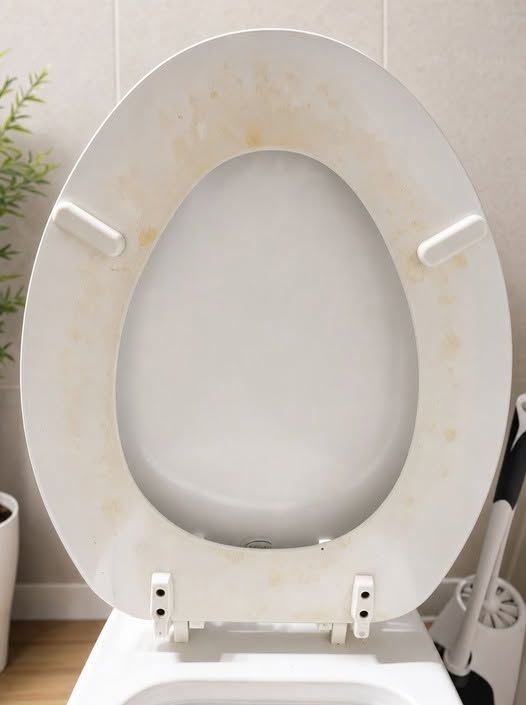
It starts as a faint discoloration near the waterline and somehow turns into a ring that mocks every scrub session, the kind of stain that makes you want to apologize before anyone even sees it. One frustrated homeowner said they’d tried a multi-purpose cleaner, baking soda, and straight vinegar, scrubbing again and again, yet the yellow tint stayed stubbornly in place, leaving them wondering whether the toilet was ever going to look clean again It wasn’t, no matter how much elbow grease went into it, because the real issue had nothing to do with effort. That yellow ring is typically mineral buildup rather than dirt, which means ordinary cleaning products may never fully dissolve it no matter how hard you scrub.
Why the Yellow Ring Forms
Hard-water minerals, iron deposits, or dried residue are the common culprits behind that persistent discoloration. Because these deposits bond to porcelain differently than everyday grime, standard soap-based cleaners often can’t break them down effectively.
Safe Removal Methods
For thick, stubborn buildup on suitable glazed porcelain, a wet toilet-cleaning pumice stone can help lift the stain. The key is keeping both the stone and the toilet surface wet throughout, and using gentle pressure to avoid scratching the glaze.
Lighter staining may respond better to milder acidic solutions. White vinegar, citric acid, or a dedicated limescale remover can help dissolve mineral deposits without the abrasive step a pumice stone requires.
Cleaning Precautions
Never mix cleaning products together, particularly bleach with acidic cleaners like vinegar. Combining these can create hazardous reactions, so it’s safer to use one method at a time and rinse thoroughly before trying another.
When It Keeps Coming Back
If the yellow ring reappears again and again despite consistent cleaning, it may point to something beyond routine buildup. Recurring stains can signal an underlying plumbing issue, such as persistently hard water or a slow, hidden leak worth having checked.
Treating the ring itself is only part of the solution. Identifying what keeps feeding it—whether mineral-heavy water or a leak—can save ongoing frustration and prevent the stain from simply returning after the next deep clean.