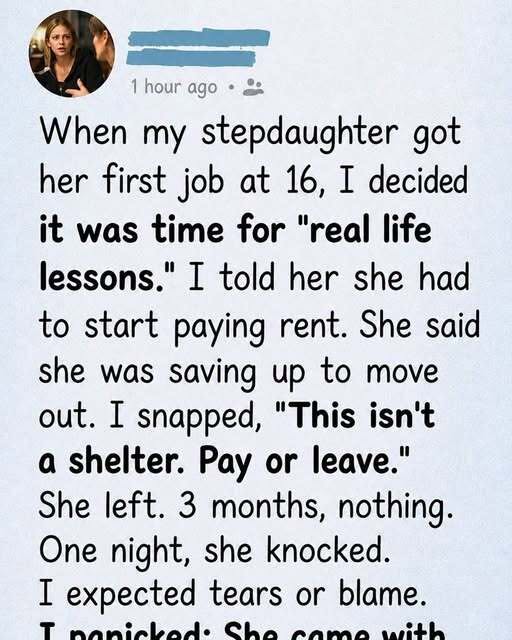
When my sixteen-year-old stepdaughter got her first job, I thought it was the perfect opportunity to teach her financial responsibility. Our family was already facing financial difficulties, and I was overwhelmed with household expenses. She often talked about saving money so she could move out when she turned eighteen. Instead of recognizing her desire for independence, I mistakenly took it as a sign that she wanted to leave our family behind. One evening, I told her that since she was earning money, she should start paying rent. When she tried explaining that she was saving for her future, I reacted harshly.
She didn’t argue or raise her voice. She simply nodded and went to her room. The next morning, I noticed that some of her belongings were missing. She had left with only a backpack and a few necessities. At first, I thought she would eventually come home, but days turned into weeks, and then a month passed. Her father tried contacting her, but she remained silent. As time went on, I began to realize just how much her absence had changed our home.
Several months later, she returned, looking exhausted and holding a small envelope. She explained that she had stayed with a friend before renting a room with two other young women. She had worked extra shifts and saved whatever she could. Inside the envelope was some cash and a handwritten note that simply said, “Rent. Three months.” Heartbroken by what I had done, I pushed the money back toward her, apologized, and told her she never had to pay for a place in our family. We talked for hours, and eventually, she agreed to stay.
I still keep that little note in a drawer as a reminder of an important lesson: teaching children independence should never make them feel unwanted. Teenagers need guidance, responsibility, and opportunities to grow, but they also need patience, understanding, and the reassurance that home will always be a safe place where they belong.