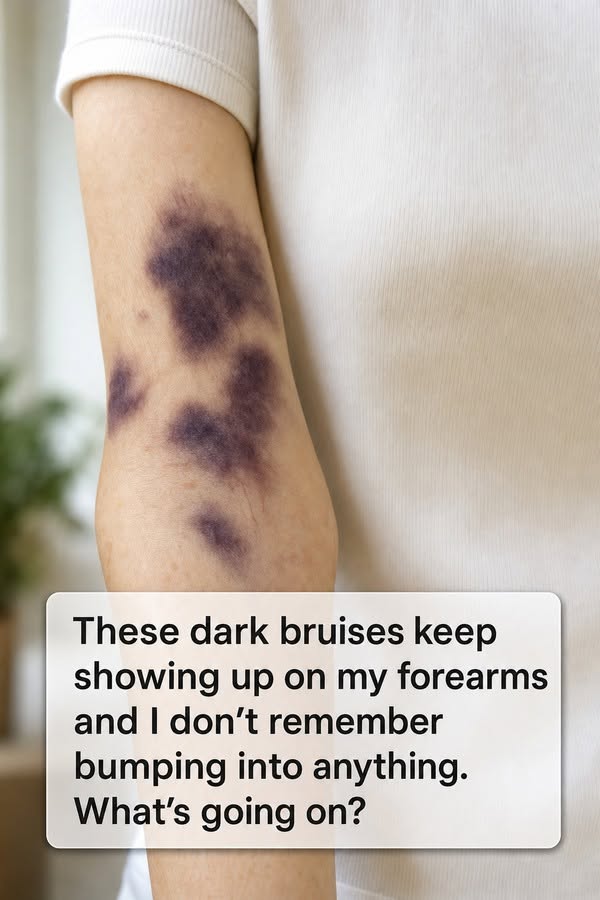
A dark bruise shows up on your forearm, and no matter how hard you think, you can’t recall bumping into anything. For many older adults, this is a familiar and unsettling surprise, one that often traces back to quiet changes happening beneath the skin, sometimes quietly amplified by years of sun exposure or by certain everyday medications working behind the scenes, slowly making the skin more vulnerable than it used to be…be, a vulnerability that often outpaces any single bump or scrape you might remember. The good news is that the explanation is frequently harmless. Still, knowing which signs deserve medical attention can help you tell ordinary skin fragility from something that needs a doctor’s input.
3 min read
Why Skin Bruises More Easily With Age
As skin ages, it gradually loses collagen and the cushioning layer that once protected it. That thinning leaves small blood vessels just beneath the surface more exposed, so even a light, unnoticed bump can cause a visible bruise.
Years of accumulated sun damage add to this fragility over time. One common and usually harmless result is a condition called actinic purpura, which produces purple patches on the forearms and hands, often without any memory of an injury.
Medications and Other Contributing Factors
Certain medications and supplements can make bruising more likely. Aspirin, anticoagulants, corticosteroids, and some supplements have all been linked to easier bruising in older adults.
If you suspect a medication is contributing, talk with your clinician about it. It’s important never to stop a prescribed medication on your own without medical guidance.
Caring for Fragile Skin
Protecting thinning skin starts with simple daily habits. Sunscreen, long sleeves, gentle handling, and regular moisturizing can all help guard against further damage.
If a fresh bump does occur, a cold compress wrapped in cloth may offer some relief. Home remedies like toothpaste or vinegar are not proven to help and shouldn’t be relied on.
When to See a Doctor
Most forearm bruising in older adults is benign, but some patterns are worth flagging. Seek medical advice if bruises appear suddenly, happen frequently, grow unusually large, or feel painful.
Other warning signs include nosebleeds, bleeding gums, persistent fatigue, or unexplained weight loss alongside the bruising. Bringing photos of the bruises and a current medication list to an appointment can help a clinician assess the pattern accurately.
Bruising that matches your usual pattern is often nothing to fear. But a new or changing pattern deserves a real conversation with a healthcare provider rather than guesswork at home.