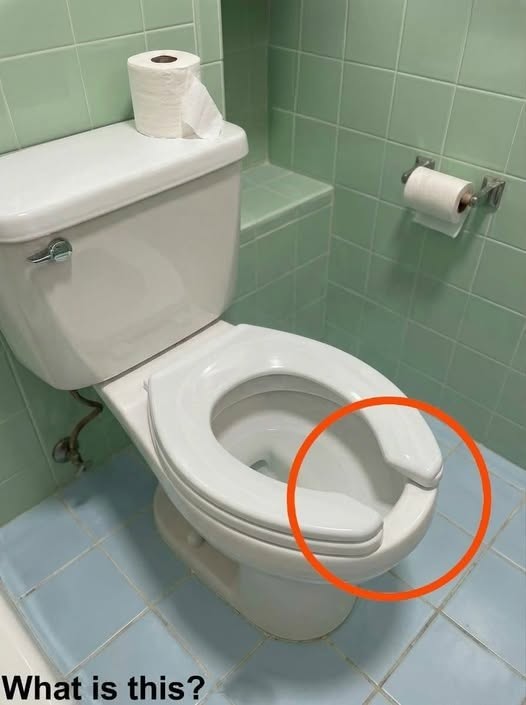
You visit a friend expecting a cozy afternoon of coffee, conversation, and the comfortable rhythms of long friendship. Then you walk into her bathroom and freeze. The toilet seat looks… wrong. There’s a gap at the front, a shape you’ve never seen at home. You feel a flush of embarrassment for even noticing it. You ask the question; your friend laughs it off. Later, you Google. What felt like an awkward moment becomes an unexpectedly interesting discovery.
The open-front toilet seat — sometimes dismissed as incomplete or damaged — is actually an intentional design with practical roots and measurable benefits. Far from a manufacturing mistake, its form reflects considerations about hygiene, accessibility, cleaning, and even cultural norms. Understanding why some toilets feature this detail reveals how everyday objects are shaped by function, history, and user needs.
A brief history: where the gap came from
The open-front seat’s origins are practical and largely institutional. In public settings — schools, stadiums, airports, and workplaces — designers and facility managers have long prioritized hygiene and maintenance. The open-front, often called a “U-shaped” or “split” seat, first gained traction in the early to mid-20th century as a sanitary solution in high-traffic restrooms. It was adopted to minimize contact with potentially contaminated surfaces and to make routine cleaning easier for custodial staff.
Hygiene and reduced contact
One primary purpose of the front gap is to reduce contact between sensitive areas of the body and the seat surface. For many users, the open front lessens the chance of skin touching the seat where urine might accumulate. In a public restroom, the perception of a cleaner surface matters; the open front communicates—and in some cases delivers—a more hygienic experience.
Cleaning and maintenance advantages
For custodial teams, the split seat simplifies chores. The gap allows easier wiping of the front rim and makes it simpler to clean the bowl area without lifting the entire seat. That small design adjustment can save time over hundreds of uses, reduce lingering residue, and potentially cut the frequency of deep cleaning cycles. In high-volume environments, such efficiencies translate to lower labor costs and a more sanitary facility overall.
Accessibility and ergonomics
Beyond cleanliness, the open-front seat can improve usability. It provides a small amount of extra room for users with mobility aids, prosthetics, or those who require assistance. For some women, the gap provides a modest ergonomic advantage when using the toilet while seated. In medical or caregiving contexts, the opening can make personal hygiene tasks less awkward and more dignified for both the user and the caregiver.
Cultural norms and expectations
Design choices are influenced by cultural habits and expectations. In countries or facilities where stand-to-pee behavior is common or where shared restroom use is high, the open-front seat became a normative feature. It sends an implicit message: this restroom is intended for many users, and the layout is optimized for turnover, sanitation, and ease of use.
Private homes versus public facilities
When you encounter an open-front seat in a friend’s private bathroom it can feel incongruous because domestic restrooms are typically tailored to family preferences, where aesthetics and perceived comfort outweigh commercial practicality. That disconnect explains the surprise reaction: a seat that reads as pragmatic and institutional in a commercial restroom looks odd within a cozy, private home.
Why the design can still feel surprising
Part of the unease comes from familiarity bias — we assume objects we’ve used our whole lives must be the only correct form. When a common item deviates from that mental template, it triggers a moment of doubt: is it broken? Another factor is the taboo around toilets; we generally avoid talking about bathroom features aloud, which makes any novel detail feel more charged. Finally, because modern home-design trends prize seamless lines and full circles, the open-front seat can feel visually unfinished, even when it’s not.
What the debate shows about good design
This small, everyday puzzle highlights a larger truth: thoughtful design often hides in plain sight. Designers balance numerous constraints—safety, sanitation, cost, cultural habits, and maintenance needs—when shaping even the most mundane objects. The open-front toilet seat is a quiet example of how iterative problem-solving can lead to a counterintuitive but practical solution.
When to choose which seat
If you’re renovating or outfitting a restroom, the choice of seat should reflect purpose:
-
Public or high-traffic restrooms: open-front seats offer sanitation and cleaning benefits.
-
Medical and caregiving facilities: the gap can aid caregivers and users with mobility needs.
-
Private homes: full-ring seats may feel more familiar and aesthetically pleasing.
-
Mixed-use spaces (e.g., family restrooms): consider the needs of all users and select a seat that balances hygiene, appearance, and accessibility.
A moment of curiosity that became insight
What began as a small social embarrassment — noticing an unfamiliar toilet seat in a friend’s bathroom — turns out to be a useful reminder that many everyday objects are the product of thoughtful engineering and social needs. The open-front seat isn’t a mistake; it’s a deliberate choice with practical benefits for hygiene, cleaning, and accessibility.
Next time something ordinary seems “wrong,” resist the impulse to assume malfunction. Ask, learn, and you may discover a little design logic that quietly improves daily life for many people. And if you still feel awkward, remember: you’re in very good company. Plenty of homeowners, partners, and friends have been puzzled by the same small, unfinished circle—until they looked a bit closer and realized the reason behind the gap.