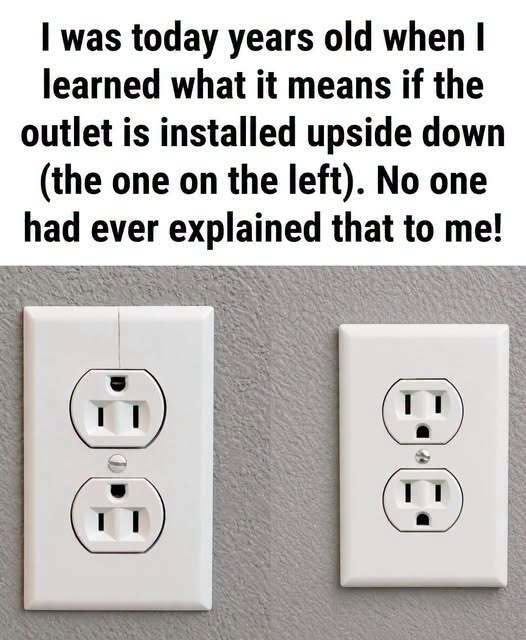
If you’ve ever noticed a wall outlet with its ground hole facing upward, you might assume it was installed incorrectly. However, this unusual orientation is sometimes intentional and can indicate a practical wiring arrangement. One common reason is a switched outlet, often found in older homes where wall switches controlled lamps before ceiling lighting became standard. In these setups, one half of the outlet may be controlled by a wall switch while the other remains continuously powered, allowing homeowners to operate a lamp without affecting other plugged-in devices.
Some electricians install these outlets upside down as a visual reminder that they serve a different purpose. However, this is simply a convention, not a universal requirement. There is no national electrical code specifying one mandatory outlet orientation, so installation practices can vary depending on the electrician, builder, or local preferences. As a result, an upside-down outlet isn’t necessarily switched or incorrectly installed.
The easiest way to determine how an outlet works is to test it safely. Plug in a small lamp and operate nearby wall switches to see whether the outlet’s power changes. What initially looks like an installation mistake may actually be a thoughtful design choice intended to make everyday lighting more convenient. Sometimes, even the smallest details in our homes have practical explanations that are easy to overlook.