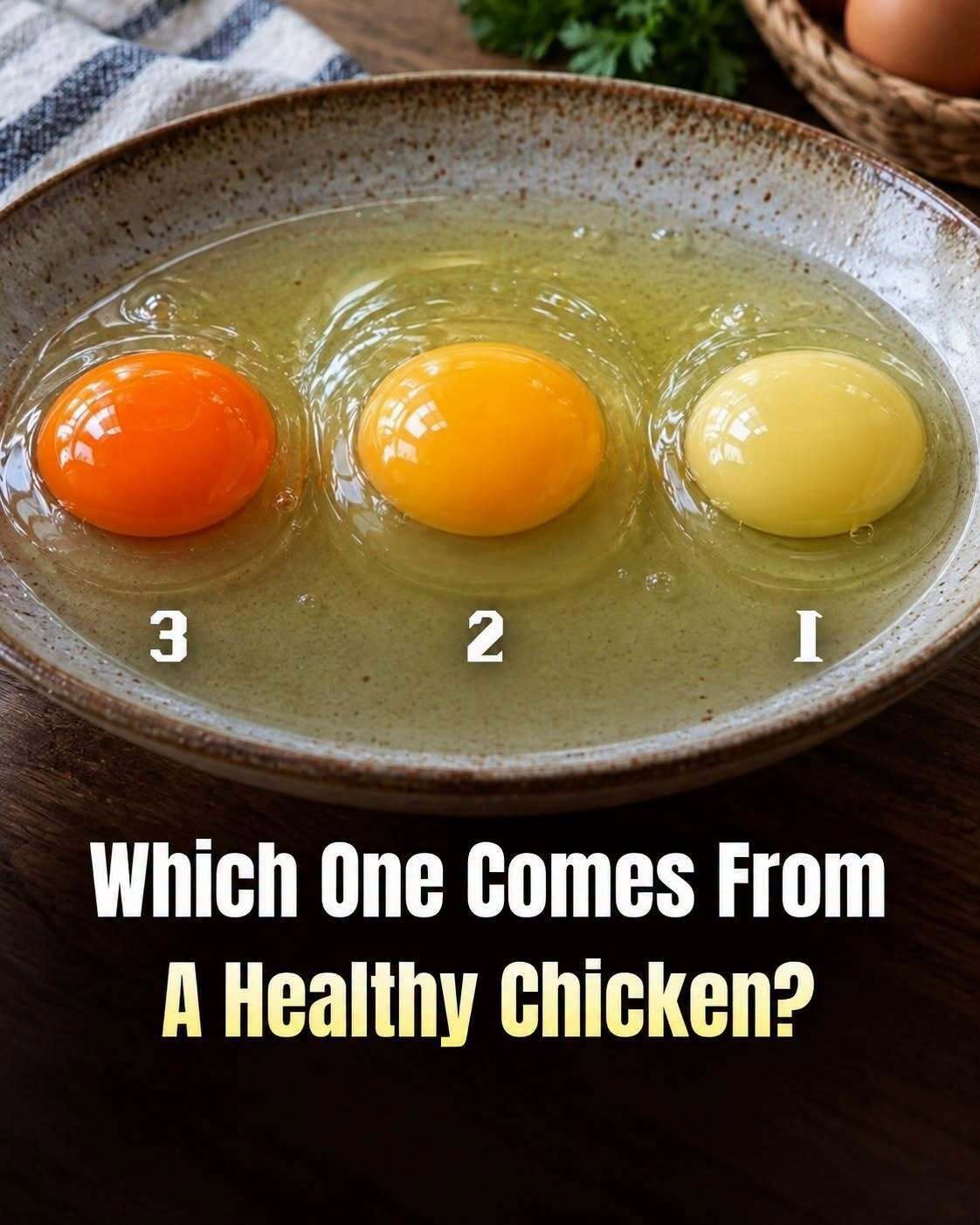
Meanwhile, a pale-yellow yolk can look disappointing by comparison.
But there’s something important most people don’t realize: the color of an egg yolk is largely determined by what the hen eats.
It isn’t a simple nutritional score.
And a darker yolk doesn’t automatically mean you’re eating a healthier egg.
The explanation begins with pigments called carotenoids.
When hens eat foods containing certain naturally occurring pigments, those compounds can influence the color of their yolks.
For example, hens with access to grasses, plants, alfalfa or other carotenoid-rich foods may produce eggs with deeper yellow or orange yolks.
Some feeds may also contain ingredients such as corn or marigold-derived pigments that intensify yolk color.
As a result, two perfectly good eggs can look dramatically different when cracked open simply because the hens were eating different diets.
One yolk might be pale yellow.
Another might be golden.
A third might be strikingly orange.
That doesn’t automatically make the darkest one the healthiest.
This is where appearance can become misleading.
Consumers often associate deeper colors with freshness and nutrition. Food that looks vibrant can seem more wholesome, particularly when compared with something paler.
But yolk color alone can’t tell you everything about the egg’s nutritional value.
A beautiful orange yolk might indeed come from a hen eating a varied diet containing pigment-rich plants.
But a similar color can also be produced through carefully formulated poultry feed containing approved pigmenting ingredients.
In other words, the color tells you something about pigments in the hen’s diet.
It doesn’t tell you the complete story of how that hen lived or how nutritious the egg will be for you.
That distinction matters.
Eggs themselves are naturally nutrient-dense foods.
They provide high-quality protein and contain nutrients including vitamin B12, selenium and choline. Eggs can also provide vitamin D, although the amount can vary considerably depending on factors such as the hen’s diet and production method.
Those nutrients don’t suddenly disappear because the yolk happens to be light yellow.
Likewise, an intensely orange yolk doesn’t automatically contain dramatically more protein or become nutritionally superior simply because it looks richer.
There can be genuine nutritional differences between eggs depending on how hens are fed.
For example, specialized diets can change the fatty-acid or vitamin content of eggs.
But those differences need to be evaluated based on the actual feed, production method or nutritional information — not simply by comparing yolk colors.
There are also other factors worth considering when buying and storing eggs.
How the hens were raised may matter to you.
So may animal-welfare standards, farming practices, freshness, handling and storage.
Once eggs reach your kitchen, proper refrigeration and cooking practices can matter far more for food safety than whether the yolk is lemon-yellow or deep orange.
Even freshness can’t reliably be judged from yolk color alone.
A darker yolk isn’t necessarily fresher.
A pale yolk isn’t necessarily old.
The appearance of an egg can provide clues, but it shouldn’t be treated as a definitive test of quality or safety.
And that’s what makes the supermarket egg aisle surprisingly complicated.
Packaging may feature green fields, rustic barns and beautiful photographs of intensely orange yolks because those images communicate a particular idea to shoppers.
Natural.
Farm-fresh.
Premium.
Healthy.
But the egg itself deserves to be judged on more than its most photogenic feature.
If you’re paying extra for eggs because of specific production standards, enhanced nutrition or animal-welfare practices, look for reliable information on the carton explaining what you’re actually buying.
Don’t rely exclusively on the color you expect to see after cracking the shell.
A deep-orange yolk can certainly be delicious and visually appealing.
So can a pale-yellow one.
The important thing to remember is surprisingly simple:
Yolk color mostly reflects pigments in a hen’s diet — not an automatic ranking of egg quality.
So the next time you crack an egg and discover a brilliant orange center, enjoy it.
Just don’t assume its color alone proves that it is healthier.
And if your yolk is pale yellow, don’t immediately assume you’ve bought an inferior egg.
Sometimes the difference between those two colors isn’t a difference in quality at all.
It’s simply what the chickens had for dinner.