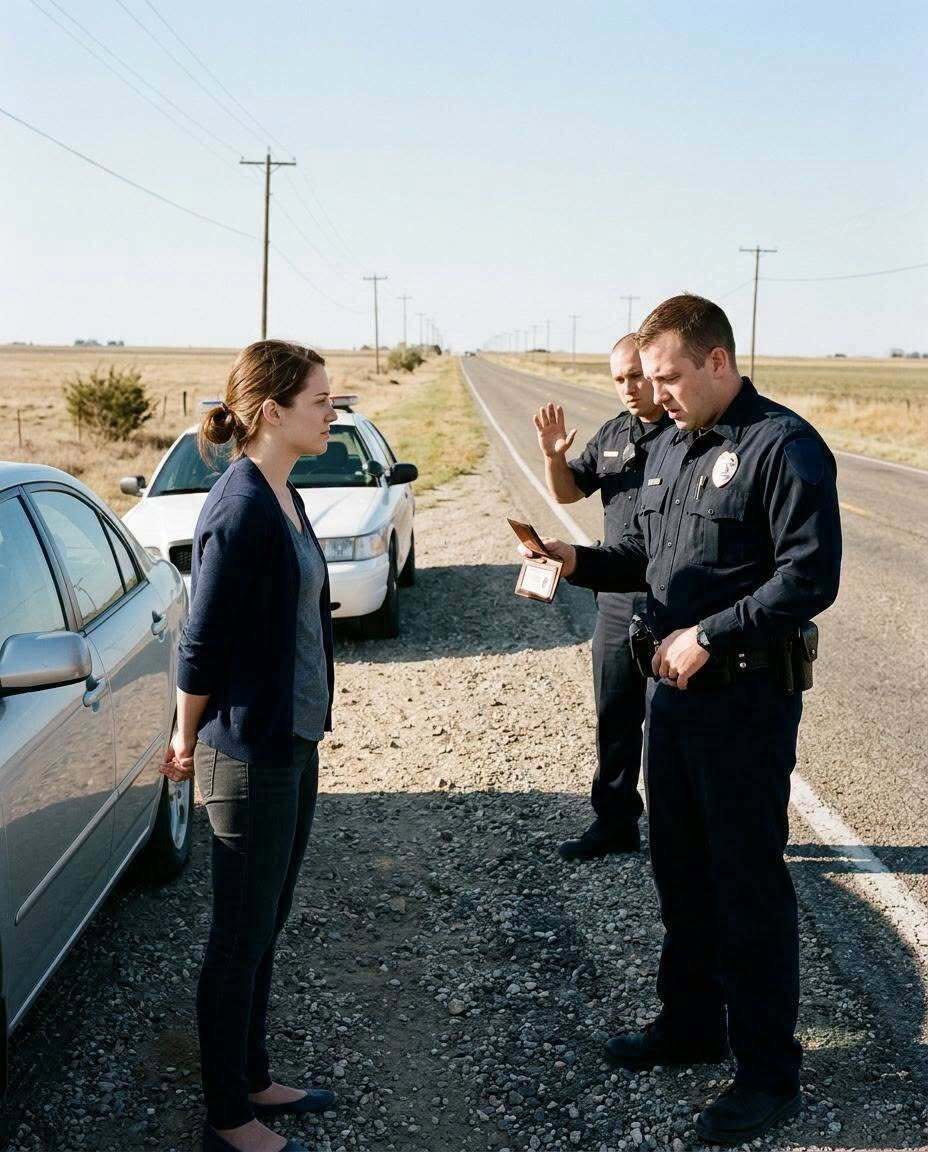
Victoria Achebe-Strand was driving home along a quiet rural highway when a patrol car pulled her over, despite her following the speed limit and obeying traffic rules. After checking her licence and registration, the officers found no apparent reason for the stop. When Victoria politely asked why she had been stopped and requested their names, the situation quickly escalated. The officers ordered her out of the vehicle, restrained her, and placed her in handcuffs after she attempted to record the encounter.
Rather than arguing, Victoria calmly asked one officer to retrieve a small leather wallet from her pocket. Inside was a gold police shield and identification revealing that she was a lieutenant with the State Police Office of Professional Standards, working as an internal affairs investigator. She instructed the officers to leave the handcuffs on and report everything exactly as it had happened. The officers soon discovered that their encounter had exposed conduct Victoria had been investigating for some time.
Victoria had been examining fourteen similar complaints involving women stopped along the same highway and had repeatedly driven the route undercover to observe the officers’ behavior. One officer’s body camera had recorded the entire incident, while the other’s had been switched off. Both officers were suspended and eventually dismissed, and the previous complaints were reopened, giving the affected women an opportunity to pursue justice. When asked whether she had provoked the officers, Victoria replied: “I asked for a reason and a name. If that is provocation, then all fourteen of them provoked it too.” Her actions highlighted the importance of accountability, fairness, and responsible use of authority.