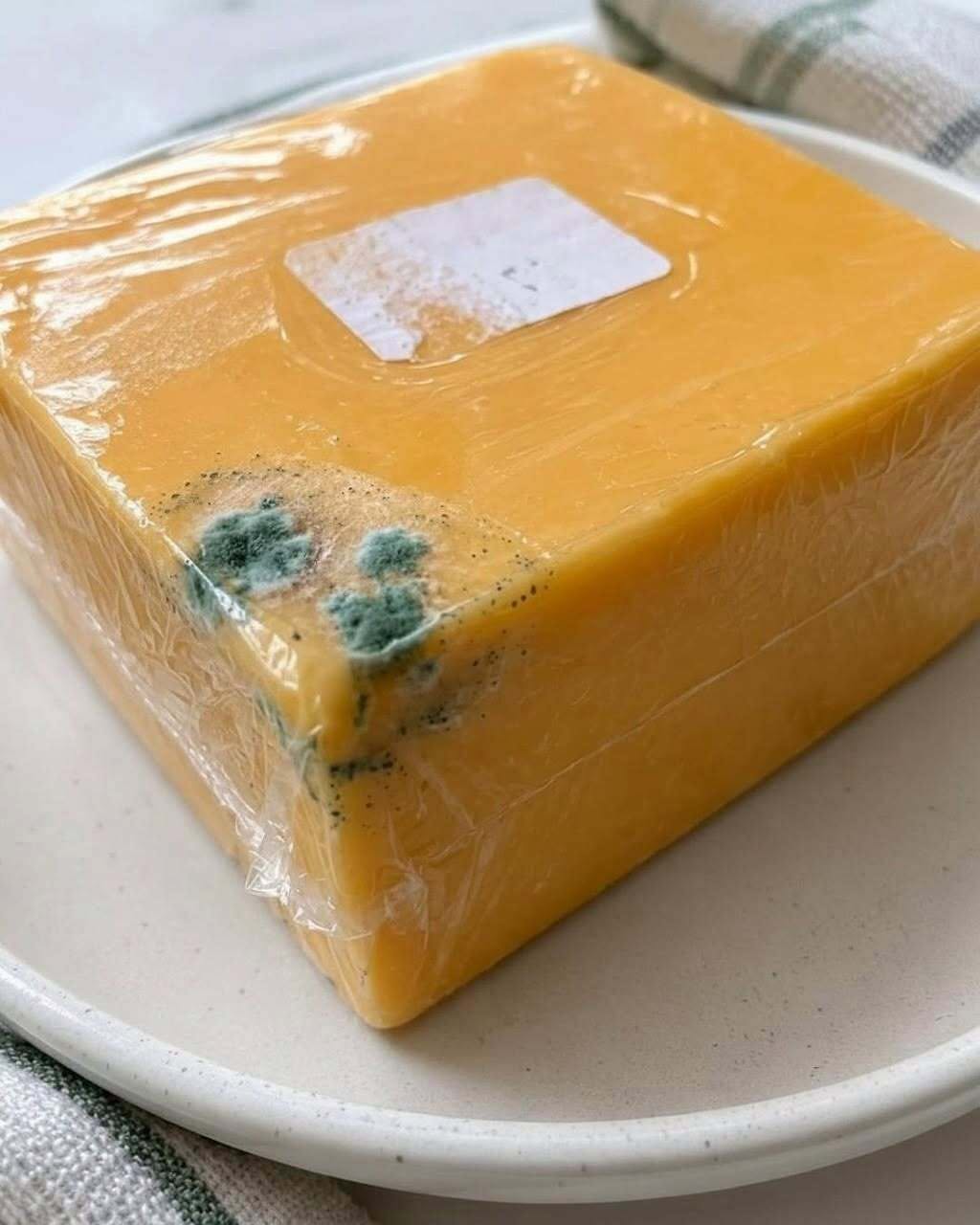
Discovering green or blue mold on cheese doesn’t always mean the entire block needs to be thrown away. The safest decision depends on the type of cheese and how easily mold can spread through it. Some varieties, such as Roquefort, Stilton, Gorgonzola, and blue cheese, are intentionally made with specific mold cultures, but unexpected mold growth on other cheeses requires caution.
Hard cheeses like cheddar, Parmesan, Gouda, and Swiss are dense and contain less moisture, making it harder for mold to spread deep inside. In many cases, the affected area can be removed by cutting at least one inch (2.5 centimeters) around and below the visible mold. Always use a clean knife and avoid touching the mold with the blade before cutting the remaining cheese.
Soft cheeses are different because their higher moisture content allows mold and potentially harmful bacteria to spread beyond what you can see. Cream cheese, ricotta, cottage cheese, Brie, Camembert, and fresh mozzarella should be discarded if unexpected mold appears. Some molds can also produce substances called mycotoxins, and neither color, smell, nor appearance can reliably determine whether contaminated cheese is safe to eat. People with weakened immune systems should take particular care.
To reduce unwanted mold growth, keep cheese refrigerated, store it in appropriate wrapping, use clean utensils, and avoid leaving it at room temperature for extended periods. The most important rule to remember is simple: mold on hard cheese can often be removed generously, but unexpectedly moldy soft cheese should be thrown away. When you’re unsure, choosing the safer option is always best.