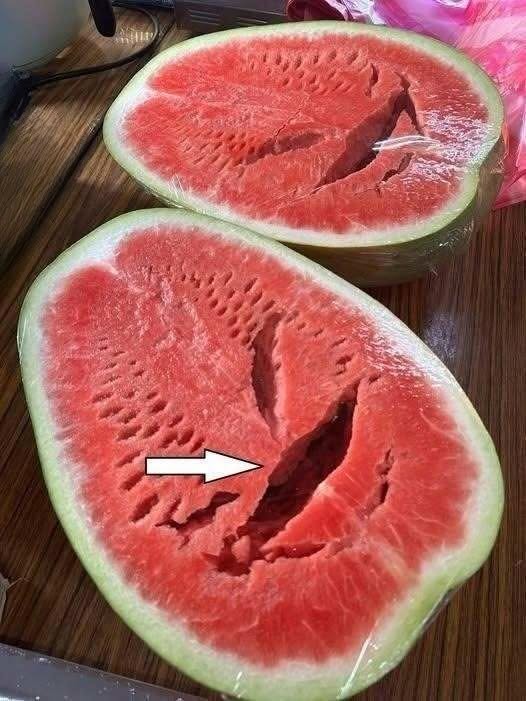
Cutting into a fresh watermelon should normally reveal crisp, juicy, bright red flesh—but occasionally, what’s inside looks very different. Deep splits, empty pockets, or strange patterns can surprise shoppers, especially after viral posts online claim these signs mean dangerous chemicals or contaminated fruit.
The good news, according to food specialists, is that the truth is usually much less worrying.
In many cases, internal cracking happens naturally because of how the fruit grew, not because of anything harmful. Knowing why it occurs can help separate internet rumors from sensible food safety guidance.
Why Do Some Watermelons Crack on the Inside?
One of the most common reasons is inconsistent growing conditions. Watermelons that go through drought and then suddenly get heavy rain or fast irrigation can grow too quickly, which may cause the flesh to split from the inside.
Changes in temperature, the normal ripening process, and even impacts or pressure during transport can also create hollow areas or internal cracks without making the fruit unsafe.
While these flaws may slightly affect texture or sweetness, they do not automatically mean the watermelon should be thrown away.
What About Growth Regulators Like Chlorfenuron?
Some online conversations mention chlorfenuron, a plant growth regulator used in certain farming practices to support cell division and fruit development.
Because it can speed up growth, chlorfenuron has sometimes been linked to hollow centers or unusual internal patterns in fruit. Even so, its use is handled differently from one country to another. Some nations restrict or ban it on certain crops, while others allow limited use under agricultural rules.
Current research has not proven that normal dietary exposure to approved amounts creates a serious health risk for people. Regulatory agencies continue reviewing the evidence and setting standards meant to protect consumers.
How to Choose a Good Watermelon
Picking a good watermelon usually begins before you even take it home.
Look for signs such as:
A fruit that feels heavy for its size.
A creamy yellow field spot where it rested on the ground.
A rind that feels firm and has no major soft areas.
A dry, brown stem that suggests natural vine ripening.
These features often indicate the watermelon ripened properly before harvest.
When Should You Throw It Away?
Small internal cracks alone are usually not a reason to worry if the fruit still looks, smells, and tastes fresh.
Still, it’s best to discard the watermelon if you notice:
A sour or fermented smell.
Slimy or mushy flesh.
Visible mold.
An odd or unpleasant taste.
Heavy spoilage throughout the inside.
Spoilage and bacterial contamination are usually far more important food safety concerns than cosmetic flaws or naturally occurring hollow sections.
Trust Your Senses and Stay Informed
Watermelon is still one of summer’s most refreshing and nutritious fruits, offering hydration, vitamins, and natural sweetness. Although unusual internal patterns can look alarming, they often come from environmental conditions rather than harmful substances.
The best approach is to use your senses and common sense. If the fruit looks fresh and smells fine despite a few internal cracks, it is often perfectly safe and enjoyable. If spoilage is obvious, it’s better to throw it out.
By learning the difference between harmless imperfections and real warning signs, shoppers can make smarter choices without unnecessary fear and keep enjoying one of the season’s favorite treats with confidence.
Have you ever sliced open a watermelon and found unexpected cracks or hollow spots? Share your experience in the comments and let us know whether it was still delicious or ended up in the trash!