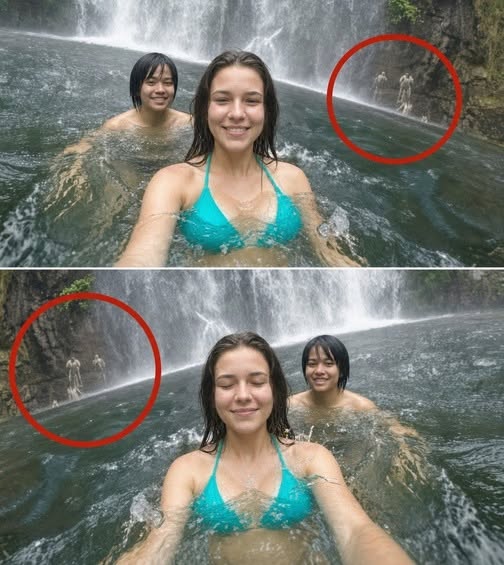
What if the thing you missed in a photo was never actually hidden at all, but simply overlooked by a brain too busy deciding what mattered? Most people assume seeing is a simple act of opening the eyes and taking in a scene, moving on without a second thought. But perception rarely works that cleanly, and the mind is constantly filtering reality long before we’re even aware a choice is being madeInstead, the brain quickly builds a simplified version of what’s in front of us, sorting information so we can focus on what seems most important. This phenomenon is called inattentional blindness, and it explains why ordinary scenes and photographs can conceal details that sit in full view the entire time.
3 min read
Why Our Brains Simplify What We See
Inattentional blindness is not a vision problem. Nothing is wrong with the eyes themselves. It is instead a natural limit on attention, one that emerges whenever we focus intently on a task or expect a scene to match a familiar pattern.
Consider walking into a familiar room. The brain often labels it instantly as a kitchen, bedroom, or office, then moves on without further inspection. Because the space feels known, there is little incentive to keep examining individual objects, colors, shapes, or small changes.
How This Plays Out in Photographs
The same shortcut happens when we look at photographs. Attention naturally gravitates toward the main subject, while the background and edges of the frame often go unexamined.
A strange object, an unusual reflection, or an unexpected figure can sit in plain view the whole time, yet the eye simply glides past it. The detail isn’t concealed by any trick of the image itself; it’s skipped over because attention is already occupied elsewhere.
This is why the moment someone points out a hidden detail can feel oddly dramatic. Something that seemed invisible suddenly becomes obvious, and the brain quickly updates its interpretation of the entire scene. It can be hard to understand how the detail went unnoticed in the first place.
This effect reveals that perception depends on more than just the eyes. Expectations, attention, and context all shape what we actually register. The brain does not function like a camera that records everything indiscriminately; it constantly decides what deserves focus and what can be safely ignored.
Training Yourself to Notice More
One practical way to catch more of these overlooked details is to deliberately slow down. Rather than letting attention settle immediately on the obvious subject, it helps to scan the edges of a scene, examine the background, and look specifically for anything that doesn’t fit the first impression.
The extraordinary details people miss are rarely truly hidden. They are simply passed over because attention is already busy elsewhere. By approaching familiar rooms, faces, and photographs with a bit more curiosity and a willingness to look twice, it becomes possible to notice layers that were there all along.