I’m a single mom, and most weeks feel like I’m just surviving on timing and luck.
My 9-year-old daughter, Mia, usually fills the house with nonstop stories. So when she came home one day completely quiet, I knew something was wrong.
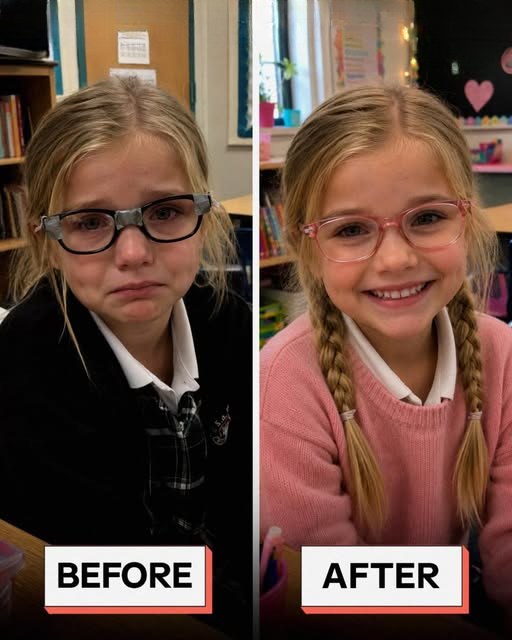
At dinner, she finally told me about a classmate, Chloe, whose glasses had broken. The frame was taped together, kids were laughing, and Chloe was hiding in the bathroom at recess.
Mia asked if we could help her. I wanted to say yes, but money was already stretched too thin. So I told her the truth: we couldn’t afford it.
She nodded and went to her room.
The next day, her LEGO bin was gone.
I thought it had been misplaced—until Mia calmly told me she had sold it for $112 and used the money to buy Chloe a new glasses frame and cover her optician account.
She didn’t hesitate. She didn’t make a big deal out of it. To her, it was simple: Chloe needed help, so she gave what she had.
The next morning, I was called into school. Chloe’s parents were there, upset—not because of the money, but because they hadn’t meant for her to feel humiliated. They had delayed replacing the glasses as discipline, not realizing it would lead to bullying.
Everything came out in that office: misunderstandings, guilt, and finally, Chloe apologizing to Mia through tears. Mia just hugged her like it was the most natural thing in the world.
A few days later, Chloe’s family opened a college savings account for Mia as a thank-you. I tried to refuse, but her father said it wasn’t about paying her back—it was about honoring what she had done.
That night, I asked Mia if she missed her LEGO set.
“Some,” she said. “But Chloe smiles more now.”
And that was all she needed.
I used to think I was the one teaching my daughter how to get through a hard world.
But sometimes, they’re the ones quietly teaching us what kindness actually costs—and why it’s still worth giving anyway.