Part 1
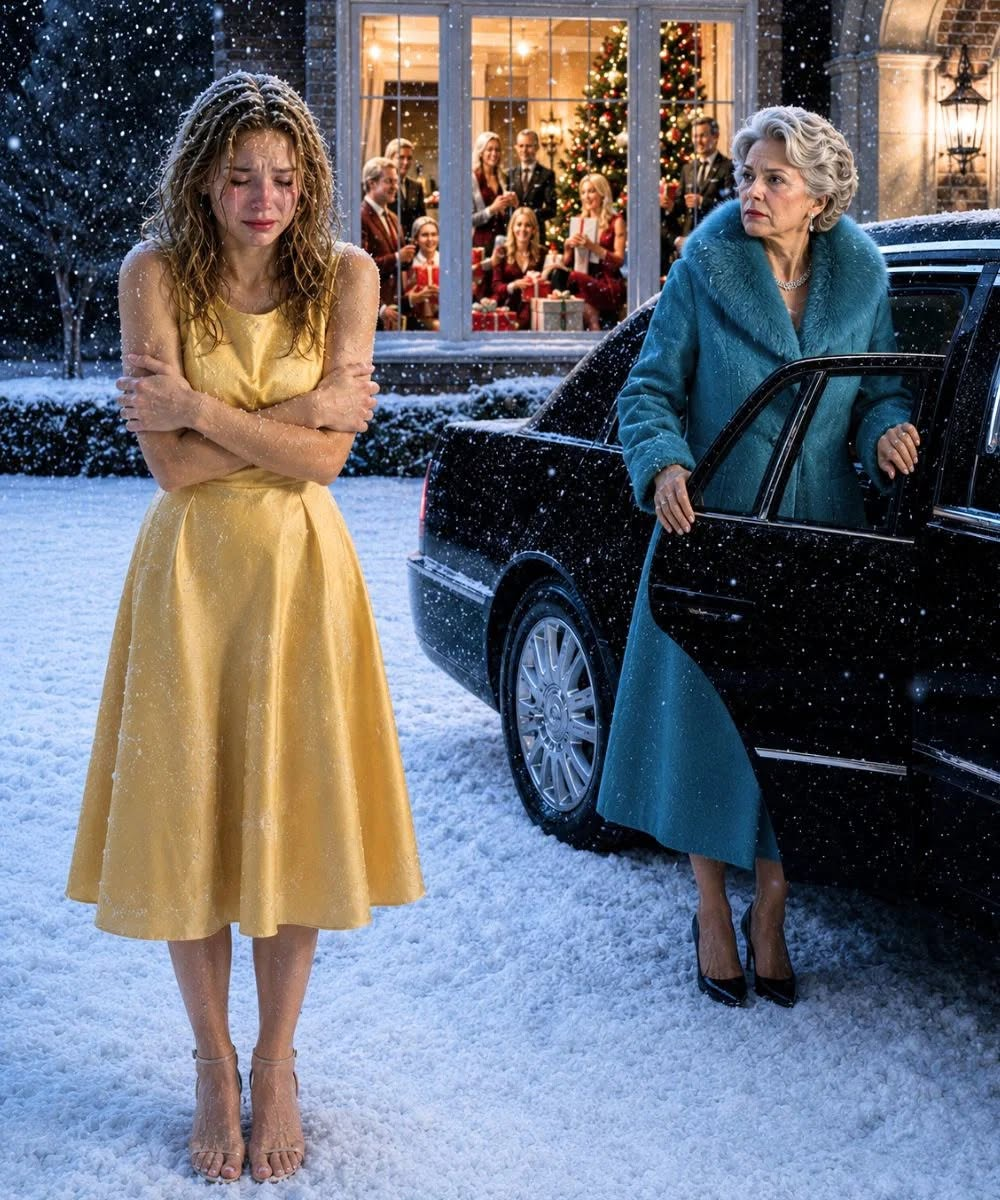
By the time my fingers turned numb and blue, my family was sitting only a few feet away, laughing over Christmas gifts.
I was outside in the snow, wearing thin dinner shoes, with the temperature at ten degrees below freezing, because my father had decided that speaking up made me dangerous.
“You want to act grown?” he had snarled as he shoved me through the back door. “Then survive like one.”
Then the lock clicked behind me.
Through the frosted kitchen window, I could see my stepmother, Brenda, filling crystal glasses with wine. My half-brother, Mason, was ripping open a gaming console. My father lifted a gold watch from its velvet box and kissed Brenda like he was the perfect family man in a Christmas movie.
I knocked once.
Brenda looked toward the window, smiled, and pulled the curtain halfway shut.
That hurt more than the cold.
At dinner, I had made only one mistake.
I asked why the envelope from my school counselor had already been opened before I ever saw it.
My acceptance letter to Waverly Academy, a private arts program in Boston, had been missing for three days.
Dad told me I was being dramatic about scholarships.
Brenda said girls like me should be thankful they even had a roof over their heads.
Then Mason laughed and waved my letter above the mashed potatoes.
“Dad already turned it down for you,” he said. “Somebody has to watch the twins next year.”
When I reached for the letter, Dad grabbed my wrist so hard the fork dropped to the floor.
“You don’t embarrass me in my house,” he hissed.
His house.
That had always been his favorite phrase.
But as snow gathered in my hair, I remembered something he did not know.
My late mother had never trusted him.
Before she died, she gave me a tiny silver key and a warning.
“When you turn eighteen, call your grandmother. Not before. Your father is afraid of her for a reason.”
At midnight, I would turn eighteen.
My phone was inside.
My coat was inside.
But the silver key was still hanging on a chain beneath my dress, colder against my skin than the winter wind.
The minutes passed slowly and painfully.
My teeth chattered.
I stopped knocking because I refused to beg.
Then, at 11:47 p.m., headlights appeared along the private road.
They were not from a pickup truck.
They were not police lights.
A black limousine glided through the snow like a shadow.
The driver stepped out first.
Then an older woman in a white cashmere coat placed one polished boot into the snow.
My grandmother looked at me.
Then she looked at the glowing windows of the house.
Her expression did not move.
She said one word.
“Demolish.”
Part 2
The driver wrapped his coat around my shoulders while my grandmother, Eleanor Vale, walked to the back door and pressed the bell once.
Inside, the music stopped.
My father opened the door, and his smile disappeared the moment he saw her.
“Mother,” he said.
She looked past him at the fireplace, the tree, the gifts, and the family pretending there was not a half-frozen girl standing on the patio.
“Why is my granddaughter outside?”
Dad’s jaw tightened.
“She was being disrespectful.”
“In the snow?”
“She needed discipline.”
Grandmother’s eyes moved to Brenda.
“And you watched?”
Brenda forced a polite smile.
“Teenagers exaggerate. Come in, Eleanor. We were just—”
“No.”
The word was quiet.
But it cut through the room like glass.
My father stepped onto the porch.
“You cannot just show up here and judge how I raise my child. This is my home.”
For the first time, Grandmother smiled.
It was terrifying.
“No, David. It is not.”
Dad gave a loud, nervous laugh.
“What are you talking about?”
She pulled a folded document from her coat pocket.
“This property was purchased by Vale Holdings sixteen years ago and placed in an irrevocable trust for Lila Rose Vale. You were allowed to live here as her guardian until her eighteenth birthday, on the condition that you maintained the property, protected the beneficiary, and did not misuse the trust funds.”
Brenda stared at him.
Mason stopped recording.
My father’s face went blank.
I did not understand every legal term at that moment.
But I understood his fear.
He had never been the king of the castle.
He had only been a temporary tenant in mine.
Grandmother turned to her driver.
“Call Mr. Hayes. Tell him we are activating the emergency removal clause tonight. Notify the sheriff and the trustee auditor.”
Dad lunged toward her.
“You vindictive old witch.”
The driver stepped between them like a wall.
Grandmother did not even flinch.
“Careful. The cameras on my car are recording.”
That was the first sign she had come prepared.
The second arrived ten minutes later.
Two black SUVs.
A lawyer.
And a county deputy who took one look at my bare feet and stopped caring about my father’s excuses.
“This is family discipline,” Dad snapped. “She is dramatic.”
The deputy looked down at my feet.
“Sir, this is evidence.”
Brenda whispered, “David, fix this.”
But Dad only made things worse.
He shouted about ungrateful daughters, greedy old women, and stolen houses.
Then Mr. Hayes opened a tablet and displayed the bank records.
Trust maintenance funds.
Tuition checks.
Medical reimbursements.
All signed by my father.
All spent on Brenda’s jewelry, Mason’s truck, and vacations I had been told we could never afford.
Grandmother crouched beside me.
“Lila, did he decline your scholarship?”
I pulled the silver key from beneath my dress.
Her eyes softened.
“My mother told me to call you when I turned eighteen,” I whispered. “I am twelve minutes early.”
She covered my shaking hand with hers.
“Then I am twelve minutes early to keep my promise to her.”
Inside, my father shouted, “You cannot take everything from me on Christmas!”
Grandmother stood.
“You took from my granddaughter for sixteen years. I am only taking back what was never yours.”
Part 3
At midnight, my birthday arrived with blue lights flashing across the snow.
My father was not dragged away like some villain in a movie.
Real justice was quieter than that.
It came with signed documents and a deputy saying, “David Carter, step away from the minor.”
“I am her father!” he roared.
Grandmother answered before anyone else could.
“Not her owner.”
Brenda tried to cry her way out.
“Lila, sweetheart, tell them this is all a misunderstanding. We are family.”
I looked through the open door at the Christmas tree and the presents I had wrapped for them with hands they had left outside to freeze.
“Family opens the door.”
Her face fell.
Mason muttered, “She is ruining Christmas.”
I laughed once.
“No, Mason. You filmed me outside for your friends. You ruined the evidence.”
He went pale.
The lawyer turned his tablet toward the deputy.
Mason’s video had been uploaded to his private story.
In it, my father’s voice was clear.
“Let her learn. Do not let her in until I say so.”
Brenda’s laughter could be heard in the background.
The deputy’s expression hardened.
“That helps.”
Dad finally stopped shouting.
His cruelty had become a timestamped confession.
Grandmother pointed toward the house.
“Everyone not named in the trust has thirty minutes to collect medication, identification, and essential clothing. Everything else will be inventoried.”
Dad stared at her.
“Where are we supposed to go?”
Her answer was colder than the snow.
“Somewhere you own.”
They had nowhere.
By dawn, contractors had fenced the property.
The house was not destroyed that night.
My grandmother was too intelligent for childish destruction.
But she demolished everything that had protected him.
His lies.
His access to my trust.
His reputation.
His control.
And the fantasy that my silence meant I had no one powerful enough to answer it.
Within weeks, the audit became a civil lawsuit.
The video became part of a child endangerment case.
Brenda lost the boutique my trust money had secretly supported.
Mason lost his truck.
My father lost his job after the board learned he had stolen from his own daughter.
The house came down in March.
I stood on the sidewalk as the excavator tore into the roof where I had once watched them unwrap gifts while I froze outside.
Grandmother stood beside me.
“Are you sad?” she asked.
I thought I would be.
But instead, I felt fresh air rush through the broken walls.
“No,” I said. “I am free.”
Six months later, Waverly Academy accepted my late appeal after Grandmother sent them the evidence and funded a scholarship in my mother’s name.
I moved into a bright dorm room and spent my first peaceful Christmas looking out over Boston Harbor.
A card arrived from my father.
There was no apology.
Only one sentence.
You destroyed this family.
I watched the card burn into ash.
Then I touched the silver key on my necklace and smiled.
It belonged to a safe deposit box my mother had left for me, filled with letters, photographs, and proof that I had been loved long before I learned how to fight.
That year, when the snow began falling again, I watched it from the warm side of the glass.