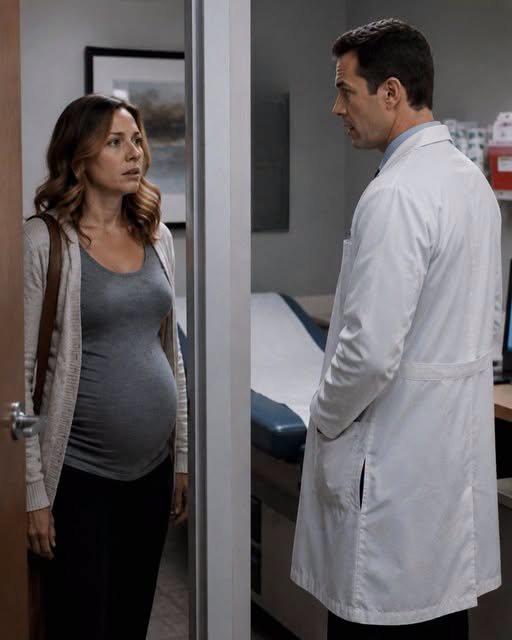
I was twelve weeks pregnant and anticipated nothing more than a standard medical visit. However, the physician who entered the room was the very boy I had adored in college—the one who had disappeared ten years prior without a single word. The revelation he shared shortly after forced me to doubt everything about my marriage.
The clinic’s waiting area carried the scent of citrus and lavender, a forced attempt at a soothing atmosphere. I sat in a corner chair, mindlessly scrolling through a list of baby names I had already memorized. At twelve weeks, the reality of my pregnancy still felt surreal. Suddenly, a specific name caught my eye, and I was instantly transported back to being nineteen.
Liam.
For two years of university, he had been a constant presence behind me, teasing me, taking my pens, and leaving sketches in my notebooks. I used to vent about him to anyone, yet I found myself searching for him every morning. Then, one Friday, he was gone. He didn’t return the following Monday, nor any Monday after that.
My phone vibrated. It was my husband, Marcus. He immediately asked if I had taken my vitamins, even though he had watched me do it. He kept asking when I would be home, his voice sounding thin and anxious. I tried to reassure him that it was just a routine checkup, but I could sense his underlying tension. I chalked it up to “nervous father energy.” He had been hovering for weeks, obsessively organizing my vitamins and checking the calendar. It was well-intentioned, but overwhelming.
A stranger in the waiting room gave me a sympathetic, “we’re in this together” smile. I returned it, resting my hand on my stomach. I had a stable life: five years of marriage, a home with a yellow door, and a husband who called me “Clarabel”—a nickname from our freshman year. I thought of Liam with the distant fondness one feels for an old song.
“Clara?” a nurse called. I stood up, still smiling at the memory of the boy from my past, and entered the exam room. As I sat on the table, smoothing my gown, the door opened.
“Good morning, I’m Doctor—” The voice cut off. My heart stopped. He was looking at my chart, and as his eyes met mine, his hand faltered. He was ten years older and wearing a white coat, but those eyes were unmistakable.
“Clara?” he whispered. I could only nod. He stood frozen, then looked back at my chart. A look of shock, followed by something deeply uncomfortable, crossed his face before he masked it. He cleared his throat and went to the sink, washing his hands with deliberate, professional precision.
When he returned, he suggested someone else, Dr. Reyes, perform the scan. I pleaded with him to just do this one, wanting the reassurance of a familiar voice. He hesitated but eventually agreed. The ultrasound was a quiet affair. He spoke in a steady tone, pointing out the heartbeat on the screen, though I noticed a slight tremor in his hands.
Once the scan was done, he looked at the chart again. “The father, Marcus… is that…”
“My husband,” I replied.
“Liam?” I asked.
He set the clipboard down. “Yes.”
When I asked where he had gone, he explained that his father had become ill and they had moved suddenly. He claimed he had tried to reach me via phone and email for months. I told him I had received nothing. He countered that I had sent a single email from my university account stating I was happy with Marcus and asking him to never contact me again.
The world felt like it was spinning. I insisted I never wrote that. He told me I should get dressed and that he would transfer my care to Dr. Reyes, as it was unprofessional for him to continue. After he left, I sat in my car, staring at Marcus’s text: “Call me the second you’re out, okay? Love you.” I didn’t call. I realized Liam hadn’t vanished; he had been told I wanted him gone. And the person who would have known that was my husband.
I spent hours by the river before going home. I waited until Marcus was settled before asking him about Liam. Marcus dismissed it as a coincidence and accused Liam of lying to cover up his disappearance. He even tried to patronize me, suggesting my pregnancy was making me emotional.
That condescension triggered something. Over the next few days, I investigated. I found old messages from my mother revealing that Liam had tried to reach me through her, but Marcus had intercepted the messages, claiming he would pass them along.
I met Liam at a cafe. He showed me a printout of the email from ten years ago. The metadata proved it had been sent from the engineering building at 2:14 AM. I wasn’t in engineering; Marcus was. Liam had suspected the truth for years but lacked the proof.
I went home and confronted Marcus with the evidence. He tried to gaslight me again, calling me emotional, but I wouldn’t budge. He finally broke, admitting he had loved me since freshman year and wrote the email to “close the door” on Liam so I would finally notice him.
I told him he needed to move out. I wasn’t punishing my daughter, but I could not live a lie. Months later, after a difficult birth, I sat in the clinic with my daughter. I received a simple “Congratulations” card signed by Liam. Marcus visited the baby, acting with a newfound, cautious respect.
I realized then that I had confused being monitored for being cared for. Marcus’s “devotion” was actually a way to control my narrative. As I looked at my daughter, I promised myself that from this moment on, I would be the one in control of my own story.