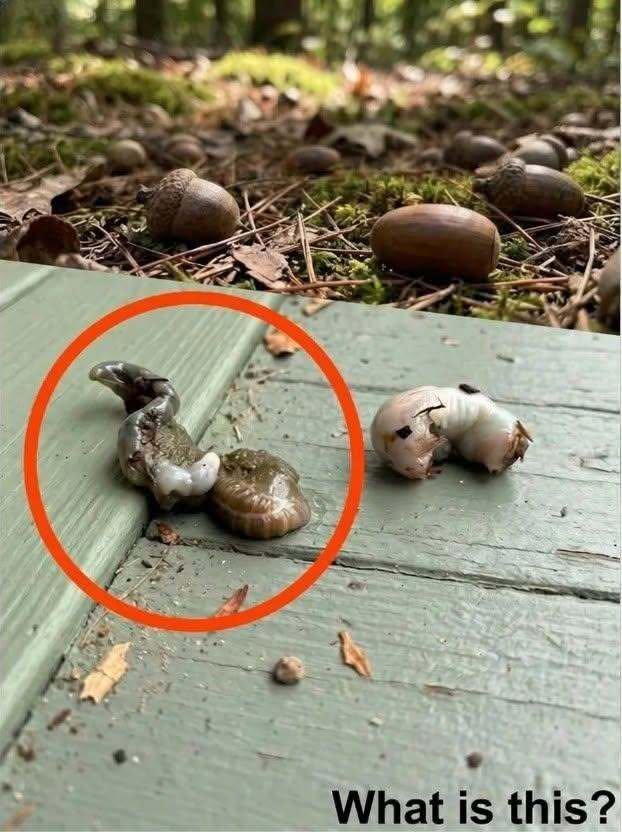
At first glance, seeing a pale, worm-like creature crawling out of an ordinary acorn might seem alarming. However, it is most likely an acorn weevil larva, a small insect that develops inside oak seeds. Female acorn weevils from the genus Curculio lay their eggs inside developing acorns. Once the eggs hatch, the larvae feed on the nutritious material inside, remaining hidden for weeks or even months as they grow.
When the larva is fully developed, it chews a small opening through the acorn’s hard shell and makes its way out. It then enters the surrounding soil, where it eventually transforms into a pupa before emerging as an adult beetle. One common sign of an infested acorn is a small, round hole in its shell. Adult acorn weevils look quite different, with brownish or grayish bodies and a distinctive elongated snout.
Despite their unusual appearance, these larvae are generally harmless to people and pets. They are not venomous and do not pose a threat simply by being present around oak trees. They also play a natural role in the forest ecosystem, providing food for other organisms. If you collect acorns for decorations or crafts, check them for small holes, cracks, and signs of insect activity before bringing them indoors. Rather than using pesticides, it is generally best to leave any larvae you discover outdoors. What looks like a strange discovery is actually a fascinating example of nature’s hidden life cycle.