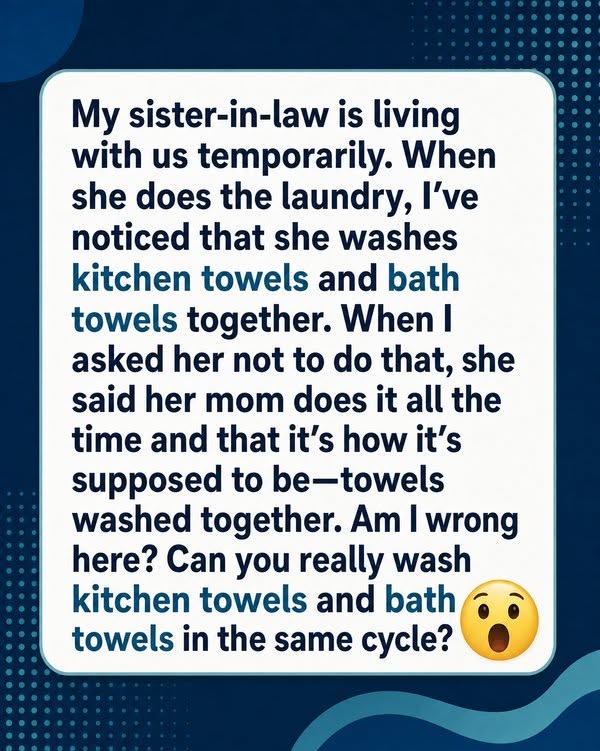
Your fresh towels could be sharing a wash with yesterday’s kitchen grime. A harmless-looking cloth can turn a laundry shortcut into a messier decision, but separating every kitchen towel from every bath towel misses the real issue. Before you load the machine, one overlooked detail can change what belongs together and what needs a separate washThat detail has nothing to do with which room a towel came from, and everything to do with what it has actually touched during use.
2 min read
What Actually Determines Whether Towels Can Mix
The deciding factor is use and soil level, not origin. Kitchen cloths used only for drying clean dishes or freshly washed hands can usually join bathroom towels in the same load.
Before combining them, check that fabric care instructions are compatible, then pick a detergent and wash setting suitable for both types. It’s worth remembering that bath towels collect moisture, skin oils, and skin cells, so a lightly used kitchen towel isn’t automatically the dirtier item in the mix.
When to Keep Kitchen Towels Separate
Some kitchen cloths need their own load. Anything that wiped greasy cooking surfaces or handled raw-food messes falls into this category.
Washing these separately helps keep grease, food debris, and odors from transferring onto towels you use on your body or face. The soil level, not the room, is what triggers this separation.
Washing Tips for Best Results
A separate load solves part of the problem, but technique still matters. Always follow the care labels on your towels, since fabric type can affect how they should be washed and dried.
Leave enough room in the machine for water and detergent to circulate properly around every item. Afterward, dry everything thoroughly before putting it away.
The practical takeaway is straightforward: sort your laundry by what a towel has been used for and how soiled it is, rather than assuming kitchen and bathroom towels must always stay apart. A little attention to use, not location, keeps your wash both clean and sensible.