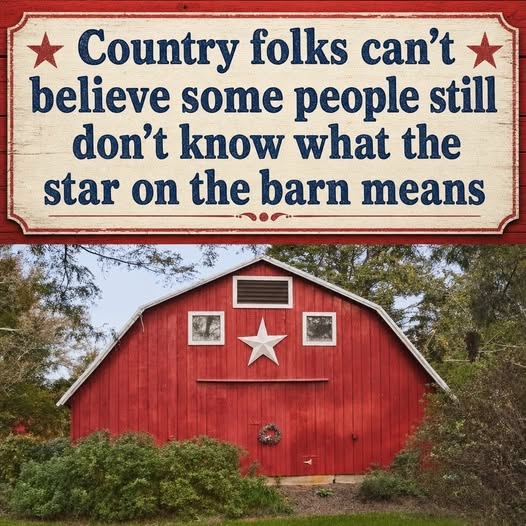
A faded star above a weathered barn door looks like nothing more than old-fashioned trim, the kind of detail most drivers barely register as they pass. But that chipped, painted star was never just decoration. It carried a quiet warning, a whispered wish, a memory nailed straight into the wood, a promise of luck, protection, and survival in a harsh world…a promise that mattered deeply when daily survival depended on the land. Today most people drive past without a second glance, yet that same chipped paint still speaks for the family who once placed it there, carrying meaning far beyond simple decoration.
Long before barn stars turned into mass-produced décor sold through home catalogs, they began as personal prayers written in color and geometry. Pennsylvania Dutch farmers treated these painted hex signs as deliberate, careful work, not casual decoration.
Each sign layered symbols meant to blend faith, superstition, and identity, reflecting a farmer’s sense of who they were.
Color and Meaning in Hex Signs
The Pennsylvania Dutch believed every shade on a hex sign held its own purpose. Red was meant to draw fortune and love, while blue was used to calm storms, both the ones in the sky and the ones in the mind.
Green was chosen to coax life from the soil, supporting a farm’s survival through each growing season. Black served a different role, guarding against harm that couldn’t be seen or explained. Together, these choices turned a simple barn ornament into what was essentially an intimate contract with fate.
From Talisman to Testimony
As farming practices modernized and some of the old beliefs softened, the stars themselves never disappeared. Instead, their purpose shifted, moving from protective talisman to lasting testimony.
A star on a barn no longer needed to ward off misfortune to matter. It could simply mark who had built the structure, who had worked the land, and who had hoped for something better from it.
That shift explains why the symbol still appears today, long after its original meaning faded from common memory. A star on a barn, a shed, or even a suburban porch carries more than rustic charm.
It stands as someone’s quiet insistence that their story, however small or ordinary, will not go unnoticed. In that sense, the barn star has outlived its original use while keeping its deeper purpose intact: marking identity, labor, and belonging on the land.