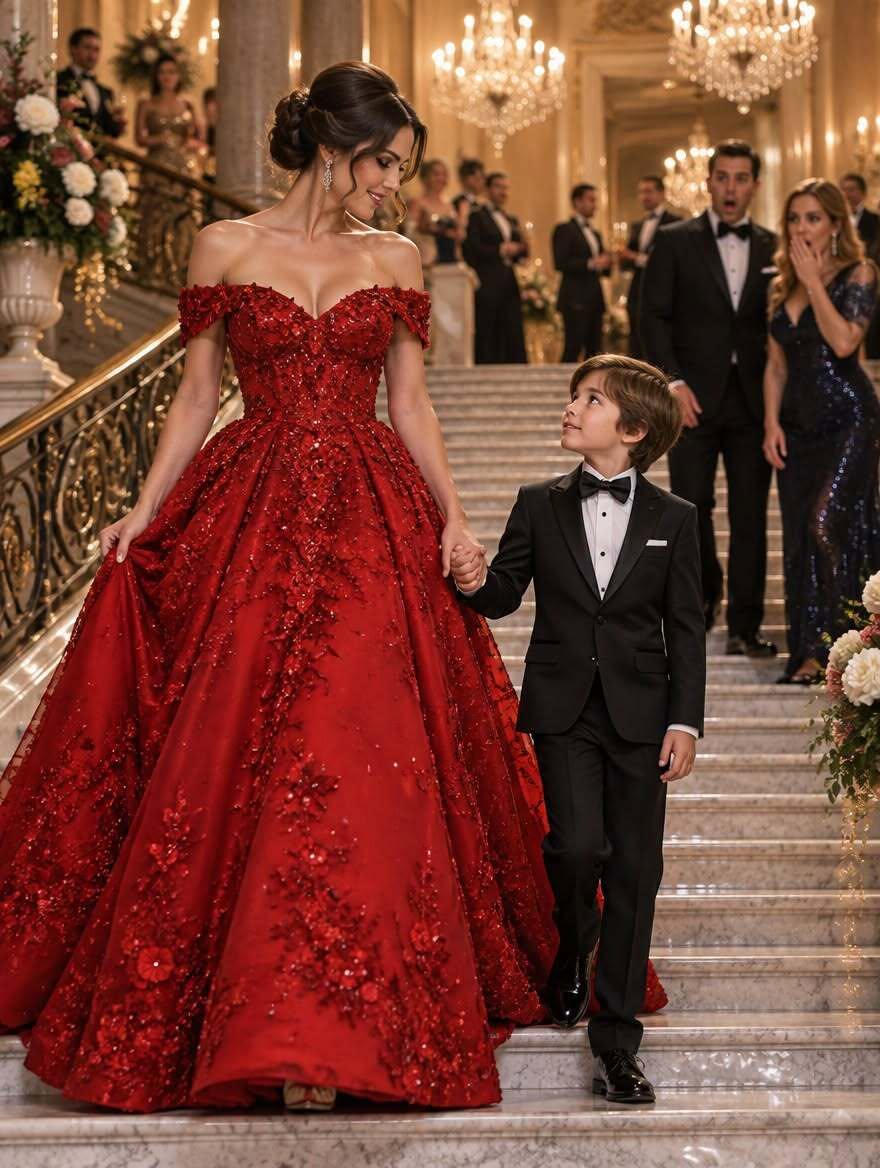
My Husband Took His Mistress to a Gala and Left Me to Clean. He Didn’t Know I Was the Investor Saving His Company.
The sound of breaking porcelain echoed through our Palm Beach kitchen.
My mother-in-law, Evelyn, had dropped a serving platter and immediately blamed me.
“Seven years of marriage, Vivienne, and you still don’t know how to prepare a proper dinner.”I stood beside the kitchen island, looking at the pieces scattered across the floor.
My husband, Preston, barely glanced up from his phone.
“Clean it up before someone scratches the marble,” he said.
Then he adjusted his tuxedo.
“You’re not coming to the gala tonight.”
I looked at him.
“Why?”
“It’s an important business event. I need someone who understands that world.”
As though summoned by his words, Vanessa Sinclair walked through our front door wearing a burgundy evening gown.
Preston’s director of corporate relations.
And, as I had recently discovered, his mistress.
Evelyn greeted her warmly.
Preston looked at me.
“Don’t make this difficult. I’ve given you a very comfortable life.”
I said nothing.
Minutes later, I watched him kiss Vanessa beside the waiting limousine.
Then they drove away.
For seven years, I had mistaken patience for keeping peace.
That evening, I finally understood how much of myself I had surrendered to maintain it.
Preston believed my wealth came from a modest inheritance.
He knew I supported charitable organizations.
He knew my family had investments.
But he had never shown much interest beyond that.
My grandmother had helped establish Sterling Crown Holdings, and I now served as its controlling shareholder and chairwoman.
The firm managed substantial investments, including a financial interest in Preston’s struggling business, Ashford Meridian Group.
For months, Sterling Crown had been providing capital under negotiated investment agreements.
Preston knew the company had an influential investor.
He did not know that investor was me.
I had kept our professional lives separate because I believed it protected our marriage from unnecessary complications.
Now I wondered whether secrecy had allowed both of us to avoid truths we should have faced years earlier.
I called our general counsel, Adrian.
“I’m attending the gala.”
He paused.
“Are you certain?”
“Yes. But I don’t want any special arrangements concerning Preston.”
The Atlantic Legacy Gala was a major charity event, not a stage for settling my marriage.
I wanted to attend in my professional capacity.
Nothing more.
When I arrived at the oceanfront museum, Adrian met me near the entrance.
I wore a midnight-blue gown and my grandmother’s diamond brooch.
Preston stood across the room beside Vanessa.
He saw me.
His expression changed from annoyance to confusion.
Then the presenter approached the microphone.
“Please welcome Vivienne Sterling Ashford, chairwoman of Sterling Crown Holdings.”
The room applauded.
Preston did not move.
I walked to the stage and thanked the organizers.
Then I spoke about the investments our company was making in affordable housing and sustainable business development.
I also addressed Sterling Crown’s commitment to responsible corporate governance.
I did not name Preston.
I did not announce an investigation into his company for dramatic effect.
But the people who understood the investment structure knew what my presence meant.
And Preston finally realized that the woman he had dismissed in his kitchen occupied a position he had spent years trying to reach.
After my speech, he approached me.
“Vivienne, we need to talk.”
“We do.”
He glanced at Adrian.
“Privately.”
We stepped into a conference room.
Evelyn followed.
So did Vanessa.
Preston began immediately.
“Why didn’t you tell me you controlled Sterling Crown?”
“I never lied about my family’s business.”
“You let me believe you were living off an inheritance.”
“You never asked what I did with it.”
His expression hardened.
“So you’ve been secretly controlling my company?”
“No.”
I looked directly at him.
“Sterling Crown invested in your company through agreements approved by the appropriate parties. You remain responsible for your own management decisions.”
Adrian explained that Sterling Crown would review its investment exposure in the ordinary course of business.
Any future financial support would require proper board approval and evidence that the business could use it responsibly.
It was not my personal decision to bankrupt Preston.
Nor was it my responsibility to keep rescuing his business because we were married.
Then Evelyn spoke.
“After everything our family gave you, this is how you repay us?”
I looked at her.
“What exactly do you believe you gave me?”
She began describing the house.
The cars.
The lifestyle.
Adrian clarified that much of the property she mentioned belonged to my separate family trust.
Preston looked stunned.
For years, he had taken credit for comforts he hadn’t actually provided.
But I didn’t need him embarrassed to make my point.
“I didn’t marry Preston for his money,” I said. “And I didn’t stay because I needed it.”
Then I turned toward my husband.
“I stayed because I loved you.”
He looked down.
“And tonight, you left me cleaning a broken platter while you took another woman to a gala and told me I wasn’t good enough to attend.”
For the first time that evening, he had no answer.
The following week, I consulted a divorce attorney.
Preston initially wanted to reconcile.
He said he had been foolish.
That Vanessa meant nothing.
That he hadn’t understood what I was capable of.
But those explanations revealed the very problem he needed to confront.
He kept talking about my abilities.
My wealth.
My position.
As though learning those things had suddenly changed what I deserved from him.
I told him I needed distance.
The divorce proceeded through the proper legal process.
Our attorneys reviewed the prenuptial agreement and determined which assets belonged separately to each of us.
There were difficult negotiations.
Nothing was resolved by simply ordering his family out of the house overnight.
Meanwhile, Sterling Crown continued reviewing Ashford Meridian’s finances independently.
Its directors eventually decided the company needed new leadership and a more sustainable financing plan.
Preston stepped down as chief executive.
I did not celebrate.
Hundreds of employees depended on that company.
Its difficulties were serious, and I wanted the business to survive if a responsible restructuring could make that possible.
Almost a year later, Preston asked to meet at a waterfront café.
He looked tired.
Without his tailored suits and assistants, he seemed less guarded.
“I’ve thought about how I treated you,” he said.
I listened.
Then he added:
“If I had known who you really were, I would have treated you differently.”
I felt a familiar sadness.
“Preston, that’s exactly what I’ve been trying to explain.”
He looked confused.
“I was the same person in our kitchen that I was on that stage.”
He lowered his gaze.
“I know.”
“No. I don’t think you do.”
For seven years, he had accepted my loyalty while treating my quietness as weakness.
He had allowed his mother to belittle me.
And he had assumed that because he believed I depended on him, he could decide where I belonged.
“I didn’t need you to admire my wealth,” I said.
“I needed you to respect me before you knew about it.”
He sat silently.
Eventually, he apologized without adding another explanation.
I believed his regret was real.
But regret did not mean our marriage could be restored.
I wished him well.
Then I left.
The following autumn, I attended the Atlantic Legacy Gala again.
This time, Sterling Crown was presenting the progress of several housing initiatives.
There were families moving into affordable homes.
Community organizations receiving support.
Projects that required years of planning rather than a single impressive announcement.
After the event, I stood briefly outside the museum.
I thought about the evening Preston had told me to stay home.
For a long time, I had believed that keeping peace meant absorbing insults, avoiding confrontation, and quietly proving my loyalty.
But peace built on one person’s silence is fragile.
Sometimes walking away is not an act of punishment.
It is an acknowledgment that love cannot survive indefinitely without respect.
I had not needed to destroy Preston’s life to reclaim my own.
His professional decisions belonged to him.
His business faced consequences through its own governance.
Our marriage ended because trust had been broken.
And my future was no longer something I needed to hide in order to make someone else feel important.
I had been worthy of respect in the kitchen, long before anyone announced my name from a stage.