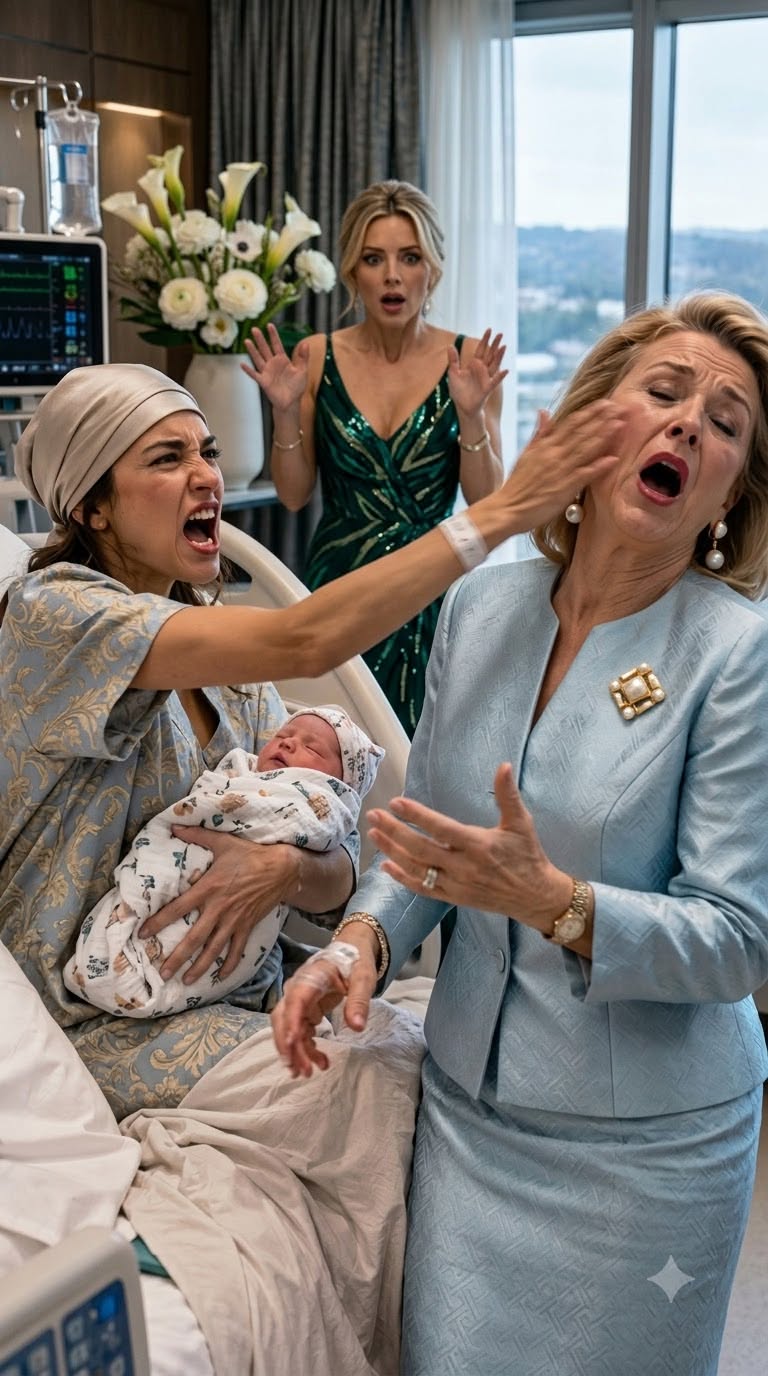
I brought my daughter into this world on a bleak, rain-battered Tuesday inside the maternity ward of Oak Ridge Military Medical Center. There was no cinematic, tear-soaked reunion. No breathless husband bursting through the swinging doors at the final hour with a bouquet of wilting roses. The only soundtrack to my agony was the relentless, synthetic hum of the fluorescent tube lights overhead and the rhythmic, mocking beeping of the fetal monitor.
My husband, Caleb, was deployed nearly a thousand miles away, running classified operations at a remote artillery training base in the desert. He was bound by federal orders he had absolutely no authority to circumvent. So, I labored alone.
For fourteen agonizing hours, I breathed through the tearing, blinding pain while a rotating cast of exhausted, nameless nurses adjusted my IV, checked my vitals, and offered hollow words of encouragement. When they finally laid her slick, warm body against my bare chest, the brutal marathon faded into a strange, echoing silence. I named her Hazel.
For a span of perhaps ten fragile minutes, the universe stopped spinning. I lay pinned to the stiff, plastic-covered hospital mattress, studying the translucent flutter of her eyelids. The sterile scent of iodine, bleached cotton, and floor wax faded into the background. My mind, usually a chaotic, war-torn battlefield of anxieties and familial obligations, was blissfully, mercifully empty. I felt a fierce, primal surge of protection. I was a mother now. The world outside this room ceased to exist.
Then, muscle memory betrayed me. I reached for my smartphone resting on the rolling aluminum tray.
The screen was a graveyard of notifications. There were a dozen check-ins from my platoon mates, their messages full of emojis and exclamation points. There was a brief, professional congratulatory email from my commanding officer. There was a shaky, tear-filled video message from Caleb, filmed secretly in the dimly lit cab of a Humvee between drills, his voice cracking as he apologized for the hundredth time for not being there to hold my hand.
And then, there was the text from my mother, Martha.
“Penny is in trouble. Real trouble this time. She took out a loan from some very bad people to cover her rent and they are parked outside her house right now. They said if she doesn’t have $10,000 by midnight, they are coming inside. I’m terrified for the kids. You need to wire the money right now. Save your sister’s family, Sarah. I’ll explain the rest later.”
That was the entirety of the communication.
I stared at the glowing pixels until they blurred. There was no inquiry about my survival. No acknowledgment of the fourteen hours of excruciating labor. No mention of her new granddaughter, the continuation of our bloodline. Just a raw, terrifying extortion demand wrapped in the chaotic dysfunction of my older sister, Penny.
Penny was a storm system of manufactured crises. She had a supernatural inability to manage her existence, viewing consequence as a concept that only applied to other people. Over the years, I had funded late rent notices, emergency transmission repairs, overdue medical deductibles, and bail money. Somehow, my hard-earned military salary had been quietly, permanently designated as the official slush fund for their survival.
But lying there in a pool of my own sweat, stitched up, trembling, and bleeding, a profound physiological shift occurred within me. The fog of lifelong obligation burned off, leaving behind a cold, sharp clarity.
I wasn’t their savior. I was a hostage funding my own captivity.
A cold, jagged resolve crystallized in my chest. If Penny had actually borrowed money from dangerous people, it was the climax of a thousand terrible decisions I had warned her about. I looked down at Hazel. She had been drawing breath for less than an hour, and I already knew one absolute truth: if I did not sever this parasitic umbilical cord right now, they would eventually sink their teeth into her, too. They would bleed my daughter dry just as they had bled me.
I typed my response with a shaking, bloodless thumb: “I just gave birth. I don’t have $10,000, and even if I did, I wouldn’t send it. If she is in danger, call the police.”
I turned the phone facedown, pressing it against the mattress. I closed my eyes, trying to force my heart rate back to a normal rhythm. But five minutes later, the device vibrated so violently it rattled against the plastic tray. I flipped it over.
“The police can’t help us,” Martha’s text read. “You just signed your nieces’ death warrants. And if they go down, they are giving those men your home address on the base. Sleep tight, Sarah.”
I was discharged two days later. The sky was the color of bruised iron as I carried Hazel out into the damp afternoon air. I strapped her into the car seat with trembling hands, my lower abdomen screaming in protest with every movement, and drove us back to our quiet, empty stucco house on the military base.
I maintained my absolute silence, ignoring the digital bombardment that escalated with terrifying speed. Because I didn’t respond, their tactics shifted. The supposed “loan sharks” never materialized at my door, which confirmed my darkest, most cynical suspicion: the threat was either wildly exaggerated or entirely fabricated to force my hand.
Exactly one week after Hazel’s birth, I was pacing the worn rug in the living room. I was running on perhaps four hours of cumulative sleep over three days, desperately bouncing a colicky Hazel against my shoulder. My joints ached with a deep, bone-weary fatigue, my sleep was fractured into chaotic two-hour increments, and my hormones were plummeting into a dark, suffocating abyss.
Without a single knock, the heavy front door violently swung open, slamming against the drywall with a noise like a gunshot.
My mother still possessed a spare key. I had given it to her a year ago for “emergencies,” a decision I now deeply regretted.
Martha stomped across the threshold. She didn’t bother to remove her wet shoes, tracking mud onto the entryway runner. But she wasn’t alone. She was dragging my eight-year-old niece, Lily, by the wrist. Lily’s face was red and splotchy, her eyes wide with sheer, unadulterated terror. She looked as though she had been crying for hours.
Martha didn’t glance at the blanket swaddled against my chest. She didn’t ask if my stitches were healing. She marched Lily right into the center of my living room and forced the weeping child to her knees onto the rug.
“Tell her,” Martha hissed, digging her manicured nails into Lily’s fragile shoulder. “Tell your Aunt Sarah what’s going to happen to you because she’s too greedy to help her own flesh and blood.”
Lily sobbed, her small chest heaving as she looked up at me with desperate, pleading eyes. “Auntie Sarah… please… Mommy is crying all the time. The bad men are going to take my little brother away. Grandma said you have the money to make them stop. Please don’t let them take us.”
My stomach dropped into my knees. The sheer, sociopathic cruelty of it paralyzed me for a fraction of a second. Martha was weaponizing a terrified child against a postpartum mother. She had actively coached Lily, filling a little girl’s head with nightmares of abduction and violence, just to break my boundaries.
Hazel violently jerked against my collarbone, startled by the screaming, and unleashed a piercing, terrified shriek.
“What on God’s green earth is wrong with you?” I breathed, stepping back as my maternal instincts flared into a blinding, white-hot rage. “Get her up. Get her up right now!”
“Not until you transfer the funds,” Martha yelled, stepping closer, her eyes flashing with a dangerous, erratic energy. The cloying scent of her floral perfume invaded my space, nauseating in its familiarity. “Family is supposed to show up for each other when the chips are down. You think that uniform makes you better than us? You’re going to watch this child beg until you do your duty.”
My duty.
I looked at Martha, then down at Lily, who was curling into a ball on the floor. The rupture inside me wasn’t an explosive meltdown. It was a sudden, terrifying drop in temperature. All the warmth, all the hesitation, all the lingering daughterly guilt evaporated into the chilled air.
“Get out of my house,” I commanded, my voice a dead, flat monotone that surprised even me.
“I am your mother, and I will not leave until you fix this!” Martha lunged forward, her hand reaching out—not to strike me, but toward the swaddle against my chest. “Let me hold my granddaughter. Let me show you what real family looks like.”
She crossed the invisible line. She reached for my baby.
I twisted my body, shielding Hazel from Martha’s grasping hands. With my free hand, acting on pure, adrenaline-fueled instinct, I shoved my mother backward. I pushed hard enough that her heels caught on the edge of the rug, and she stumbled backward, crashing into the hallway console table. A framed photograph of Caleb and me shattered onto the hardwood floor, the sound of breaking glass echoing sharply in the small room.
Lily screamed, covering her ears.
“Don’t you ever reach for her again,” I snarled, backing toward the kitchen counter where my phone lay. My breath was coming in ragged gasps.
Martha’s face contorted into a mask of pure, unadulterated malice. The shock of being physically repelled morphed instantly into vindictive rage. “You put your hands on me? I will ruin you, Sarah. I will tell your command that you assaulted an elderly woman and a child in front of witnesses!”
I didn’t argue. I didn’t try to reason with a terrorist. I picked up the phone and dialed the base’s Military Police dispatch.
“This is Sergeant Sarah Jenkins at quarters 4B,” I said, my voice eerily calm despite the violent trembling in my legs. “I have a hostile intruder refusing to leave my residence. She is escalating physically. I need units here immediately.”
Martha blinked. Her mouth opened, but no sound came out. She stared at me as though I had just spoken dead Latin. She had genuinely believed my boundaries were mythical constructs, easily trampled with enough volume and guilt. But the moment she heard the dispatch operator confirm units were en route, the illusion of her absolute control shattered.
She yanked Lily off the floor by her arm. “You are dead to us,” she hissed, dragging the wailing child out the door, slamming it so hard the drywall dusted the floorboards. She sped off just as the flashing red and blue lights turned onto my street.
The aftermath was a humiliating, degrading spectacle. Neighbors peeked through their blinds as two armed MPs stood in my living room, taking my statement while I wept silently, rocking a screaming Hazel. By the next morning, the incident report had landed on my commanding officer’s desk.
I was summoned to the commander’s office. Major Hayes was a strict but fair man. He looked at me across his polished desk with a mixture of professional concern and deep pity.
“Jenkins, your record is spotless,” he began, sliding a piece of paper across his desk. “But domestic instability is a massive red flag for security clearance and deployment readiness. If your family is bringing violent threats and physical altercations onto a federal installation, I have to formally evaluate your status. The military cannot afford liabilities.”
I stared at the wood grain of the desk. My career, the only stable, honorable thing I had ever built for myself, was actively crumbling because I refused to be extorted. I assured him it was handled, but his skeptical gaze told me I was on borrowed time.
I returned home feeling completely hollowed out. I sat on the sofa, holding Hazel, trying to figure out how to repair the massive collateral damage to my life. I went to the mailbox at the end of the driveway to retrieve the day’s letters, desperate for a distraction.
Among the bills was a thick, manila envelope. It had no return address, just an official government seal stamped in the corner. I ripped it open.
It wasn’t from the military. It was a formal, expedited notification from the Department of Child Protective Services.
An anonymous report had been filed against me. The allegations were devastating: Severe postpartum psychosis, violent physical outbursts, unsafe living conditions, and imminent danger to a newborn infant.
Attached to the back of the notice was a typed, notarized letter from Martha, legally petitioning the state for emergency, temporary custody of Hazel.
The harsh black text on the white paper blurred before my eyes. The kitchen island seemed to pitch sideways, like the deck of a ship caught in a violent squall. A massive, blinding pressure bloomed behind my eyes, radiating down my neck.
She’s trying to take my baby. She’s going to take my baby.
My heart began to hammer against my ribs with the rapid, terrifying cadence of a snare drum. I looked down at my hands and realized they were trembling so violently I dropped the CPS papers. They scattered across the linoleum like dead leaves. Panic, cold and sharp as a scalpel, seized my lungs. I couldn’t pull in oxygen. The air felt thick, unbreathable.
I staggered to the bassinet, laid Hazel down safely, ensuring she was secure, and collapsed heavily onto the kitchen floor. The edges of my vision went dark, tunneling inward. I am dying. I am dying right now, and Martha is going to take her. She’s going to raise her.
I managed to drag my phone off the counter and hit speed dial for Maria, a neighbor whose husband was in my unit. She rushed over, took one look at my flushed, swollen face and dilated pupils, loaded us into her SUV, and broke several speed limits getting to the base ER.
The triage nurses did not smile. They strapped a blood pressure cuff to my arm, watched the digital numbers climb to catastrophic, stroke-level heights, and immediately rushed me into a trauma bay. It was a textbook, severe presentation of postpartum preeclampsia, triggered and exacerbated by chronic, sustained adrenaline. My family was literally crushing my heart, pushing my body to the absolute brink of failure.
When I finally managed to call Caleb from the hospital bed, the sheer terror in my voice was unmistakable. He didn’t offer empty platitudes. He didn’t tell me it was going to be okay. He went entirely tactical. He asked for the attending physician’s name, my exact vitals, and the medications they were pushing. Then, he hung up, bypassed his direct chain of command, and pushed straight to the battalion commander to demand emergency family leave.
By the following morning, the heavy hospital room door opened, and Caleb walked in. He was still in his utility uniform, covered in fine desert dust, his eyes rimmed red from flying straight through the night on a military transport. The chaotic energy in the room instantly grounded. He walked to the side of my bed, kissed my forehead, and looked at the heart monitors.
He didn’t ask for a tearful recounting of the drama. He simply held out his open palm. “Give me your phone, Sarah.”
I unlocked the device and placed it in his hand. I watched his jaw muscles feather as he scrolled through the barrage of texts from Penny, the voicemails from Martha, and the photographed CPS report I had sent him. I watched the natural warmth bleed out of his expression, replaced by a cold, calculating, lethal fury.
Suddenly, a commotion erupted outside my room.
“I have a right to see her! I’m her mother! She’s mentally unstable, and I need to see the baby!”
Martha’s voice echoed down the sterile hallway. She had tracked me down and was putting on a theatrical performance for the nursing staff, playing the heartbroken, desperately concerned matriarch.
Caleb stood up. “This ends,” he said. The tone left zero oxygen in the room for debate.
He walked out into the hall. I couldn’t see them, but I heard Caleb’s voice—low, steady, and devoid of emotion. He didn’t argue. He didn’t yell. He simply signaled the hospital security detail. Within ninety seconds, two armed guards were physically escorting a screaming, flailing Martha toward the elevators, threatening her with arrest for trespassing on a military medical facility.
Caleb returned, shutting the heavy wooden door behind him. He sat back down and picked up my phone. It buzzed in his hand. A text from Penny.
He read it aloud, his voice flat: “You think you won by locking Mom out? You might want to ask Grandma Margaret about the things your precious father did before he died. Federal crimes, Sarah. Things that would get a military security clearance permanently revoked. Give us the money, drop the MP report, or I send his files to your Commander. Have a nice life.”
The text message hit me like a physical blow to the sternum.
My father had died of a sudden heart attack when I was twelve. He was a quiet, passive man who had always seemed to fade into the wallpaper of our house, a ghost long before he actually died. The implication that he harbored some dark, career-destroying secret triggered a primal, suffocating panic inside me. If my father was a felon, and I had unknowingly benefited from it, or if Penny could spin a lie connecting me to it, my military career—my entire livelihood and identity—was over.
My instinct—honed by decades of conditioned subservience—screamed at me to surrender. Pay the ten thousand dollars. Take out a high-interest loan. Liquidate the savings. Buy the silence. Protect the memory. Save yourself.
My hands were shaking violently as I reached for the phone. “I have to fix this, Caleb. I have to reply to her before she sends it.”
A large, calloused hand gently clamped over my fingers. Caleb pulled the phone away.
“Look at me, Sarah,” he commanded gently, his eyes locking onto mine. “It’s a bluff. It isn’t a dark secret. It’s a fabricated lie designed specifically to keep you trapped in the maze. If they had a loaded weapon, they would have fired it weeks ago.”
“But what if—”
“Call Margaret,” Caleb interrupted, his logic cutting through my panic like a machete. “End the suspense.”
My grandmother, Margaret, was the fiercely independent matriarch of the family. She lived three states away and rarely engaged in Martha’s theatrical, exhausting dramas. She was the only person Martha truly feared.
Caleb dialed her number and put it on speaker. She answered on the third ring, her voice raspy from decades of unfiltered cigarettes.
“Well, it’s about time you called,” Margaret said. No pleasantries.
I took a shaky breath. “Grandma… Penny said there was something about Dad. A secret. A federal crime. Something that could ruin me and my clearance.”
A dry, dismissive bark of laughter echoed through the receiver.
“Oh, for the love of God. They are still playing that tired old card?” Margaret sighed, the sound heavy with exhaustion and profound disappointment. “Sarah, listen to me closely. The only ‘secret’ about your father is that he was a victim. He didn’t do anything illegal. Your mother did.”
The air rushed out of my lungs. “What?”
“Your mother committed identity theft,” Margaret said, her voice turning sharp and unyielding. “She opened credit cards, took out massive personal loans, and filed false tax returns under your father’s Social Security number. She ran up eighty thousand dollars in hidden debt. When he finally found out, the stress caused the massive coronary that killed him. Your mother murdered him with debt.”
I squeezed my eyes shut as tears finally spilled over, the revelation shattering the very foundation of my childhood memories.
“But that’s not all,” Margaret continued, her tone softening into something resembling pity. “When you turned eighteen and enlisted, Martha tried to do the same thing to you. I caught her trying to take out a mortgage against your name. I threatened to call the FBI if she ever touched your credit. She built this entire family structure on a bedrock of fraud and guilt. You aren’t the villain, sweetheart. You are the mark.”
I sat in the hospital bed, the truth washing over me like ice water. I wasn’t just an ATM; I was a shield to hide their criminality. I had been funding the very people who had destroyed my father.
“Where is the proof?” Caleb asked, his voice sharp and focused on the tactical advantage.
“I kept everything,” Margaret said. “Bank statements, forged signatures, the whole lot. It’s in a safe deposit box at the First National branch downtown. But you better hurry. Martha called me an hour ago, screaming about how you locked her out. She said she’s driving to my house right now to ‘collect what belongs to her.’ She knows I have the files, Sarah. She’s coming to destroy the evidence.”
Three months later, the military bureaucracy finally worked in our favor. Caleb and I fought the false CPS allegations and won, the investigator quickly realizing it was a vindictive, baseless claim. Caleb received permanent change of station orders transferring us to a highly secure base in Northern Virginia.
But before we packed the moving trucks, there was one final piece of business to conclude. I didn’t want a quiet retreat; I needed a permanent, legally binding severance.
We drove to Grandma Margaret’s house for what was supposed to be a “reconciliation dinner.” Martha and Penny had spent weeks orchestrating this ambush, inviting extended aunts and uncles, intending to publicly shame me into compliance before I left the state. They thought I was coming to surrender.
I walked into Margaret’s dining room holding Hazel. Caleb walked beside me, his presence a silent, imposing wall of support. Martha and Penny were standing by the fireplace, wearing identical expressions of smug anticipation, ready to exact their emotional toll.
“I’m so glad you decided to stop running away from your responsibilities, Sarah,” Martha said loudly, ensuring the room full of relatives heard her. “We forgive you for your little breakdown. Now, about that money Penny needs—”
I didn’t yell. I didn’t cry. I didn’t offer a theatrical defense or beg for understanding.
I unzipped Caleb’s canvas messenger bag and pulled out a thick, legal-sized manila folder. I dropped it onto the center of the mahogany dining table. It landed with a heavy, satisfying thud that silenced the room.
The clinking of silverware stopped.
“What is this?” Penny scoffed, though her eyes darted nervously to the folder.
“That,” I said, my voice projecting clearly and calmly across the room, “is a meticulously documented file containing thirty-two pages of financial records. It proves, beyond a shadow of a doubt, that Martha committed felony identity theft against my father, resulting in his financial ruin and subsequent death. It also contains the forged loan applications you attempted to file under my Social Security number fourteen years ago, complete with handwriting analysis.”
Martha’s face drained of all color. She looked like a ghost, her jaw slack.
I opened the folder and slid a separate, officially stamped piece of paper toward her. “And this is a permanent Restraining Order, signed by a federal judge. It dictates that neither of you may come within five hundred yards of me, my husband, my daughter, or my military installation. You are barred from contacting my command, or Child Protective Services.”
Penny took a step forward, her fists clenched, her bravado crumbling. “You wouldn’t dare. You’d destroy your own family?”
“You aren’t my family,” I replied, looking directly into my mother’s terrified, wide eyes. “You are a criminal enterprise. And if either of you ever texts me, calls me, files a false report, or breathes my name again… I will hand this folder directly to the FBI Field Office. You won’t be asking for rent money, Penny. You’ll be asking for commissary funds in federal prison.”
I didn’t wait for a response. I didn’t need to hear their pathetic excuses, their desperate attempts at gaslighting, or their fake tears. I picked up my daughter, turned my back on the wreckage of my bloodline, and walked out the front door into the crisp evening air.
We live in Virginia now. The house is smaller, but the profound silence inside its walls changed the chemical makeup of my brain. There are no frantic, vibrating notifications at three in the morning. There is no cold dread settling in my gut every time a vehicle slows down on our street.
I sit in my living room, watching Hazel construct a tower out of wooden blocks. She plays in an environment saturated with laughter and patience, utterly devoid of the ambient tension I grew up breathing.
She will never be taught that love is a transactional currency. She will never be burdened with the sickening belief that she is personally responsible for the happiness of adults who refuse to govern themselves.
Peace, I have come to understand, is not a gift handed to you by reasonable people. It is a sovereign territory you must aggressively claim and fiercely defend against those who wish to conquer it. And once you stop actively trading your own sanity to purchase the approval of your captors, you finally, truly begin to live.